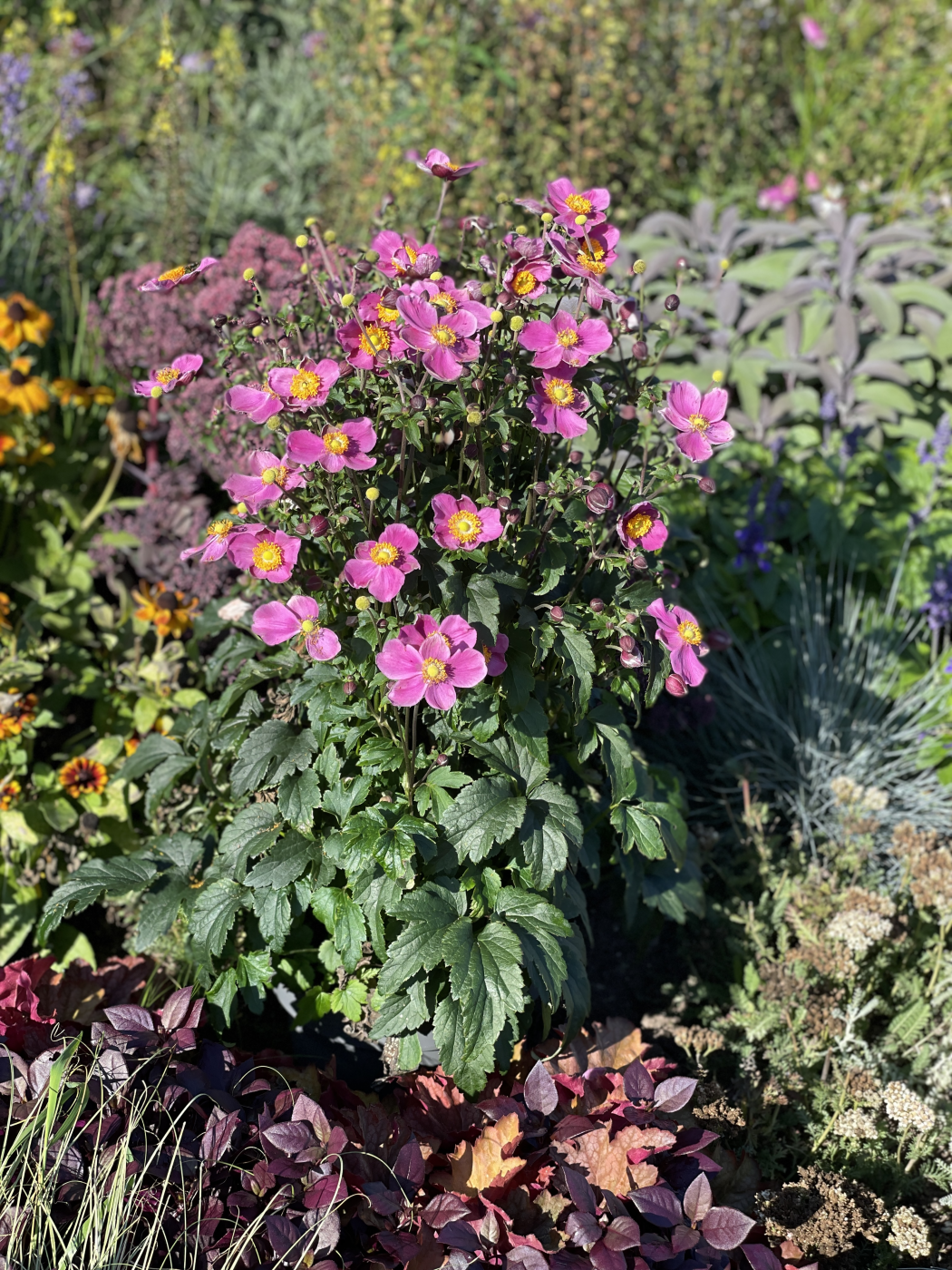
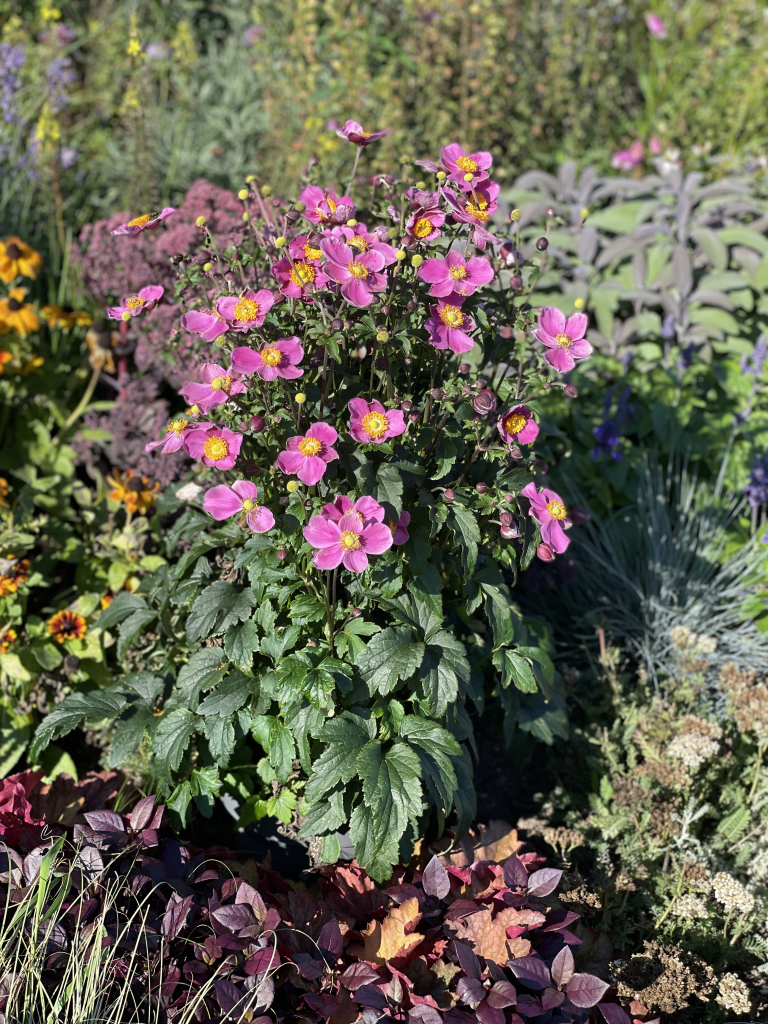
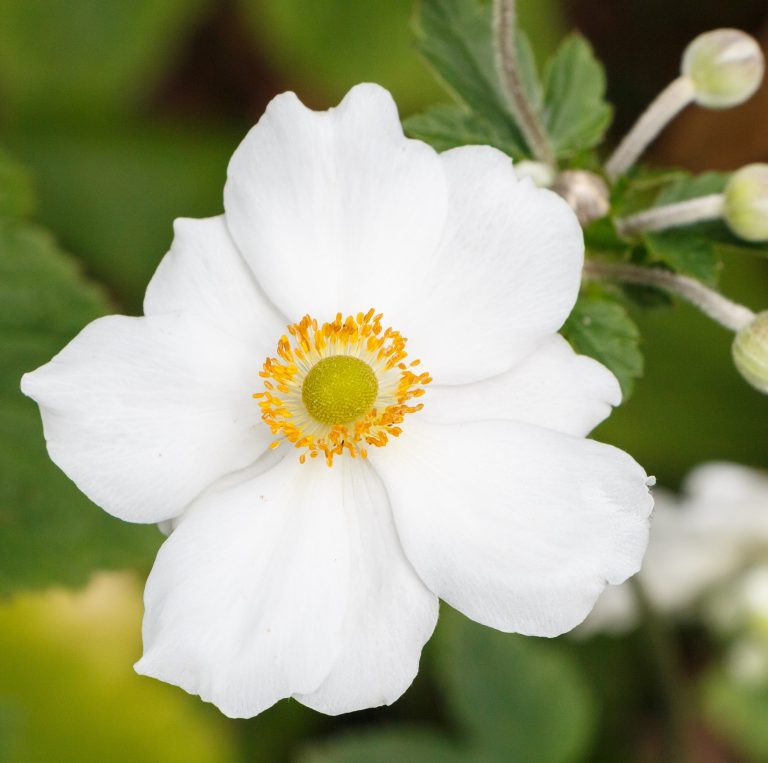
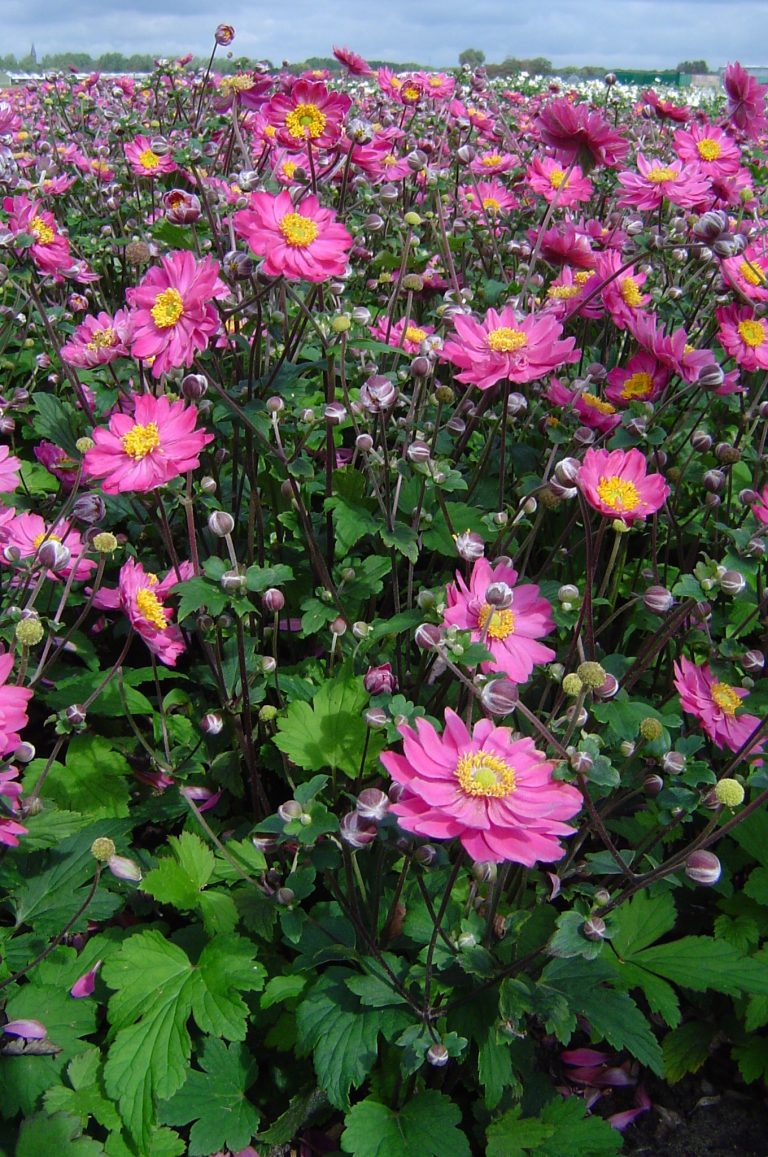
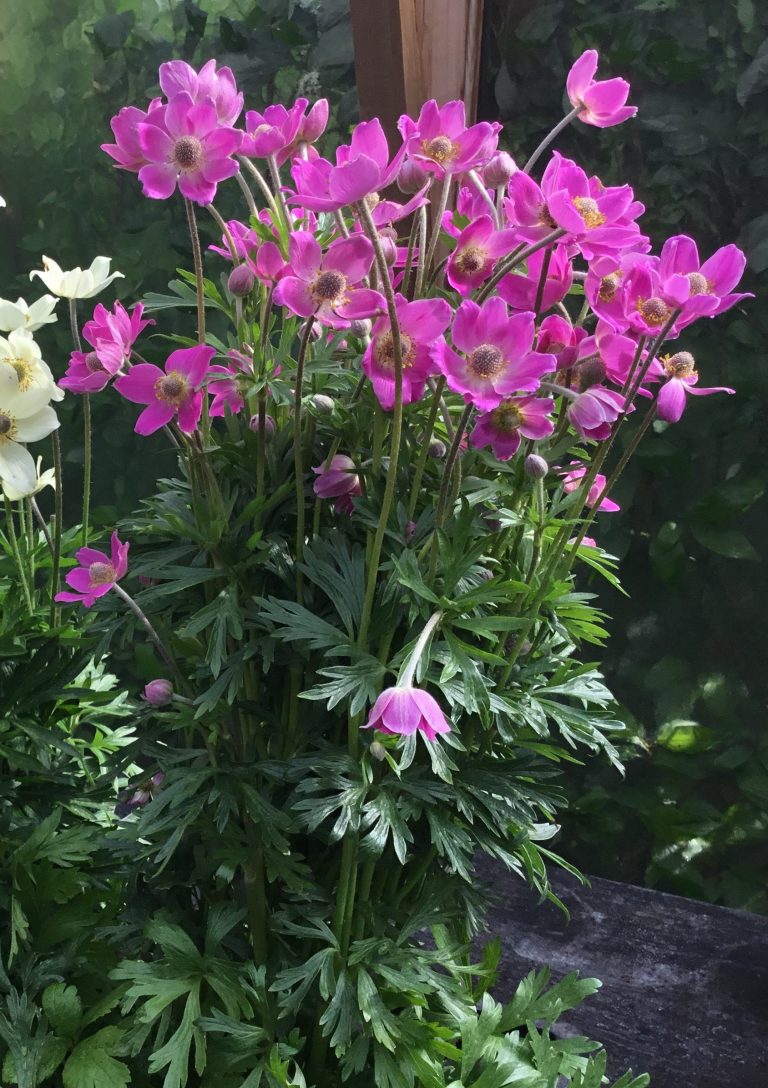
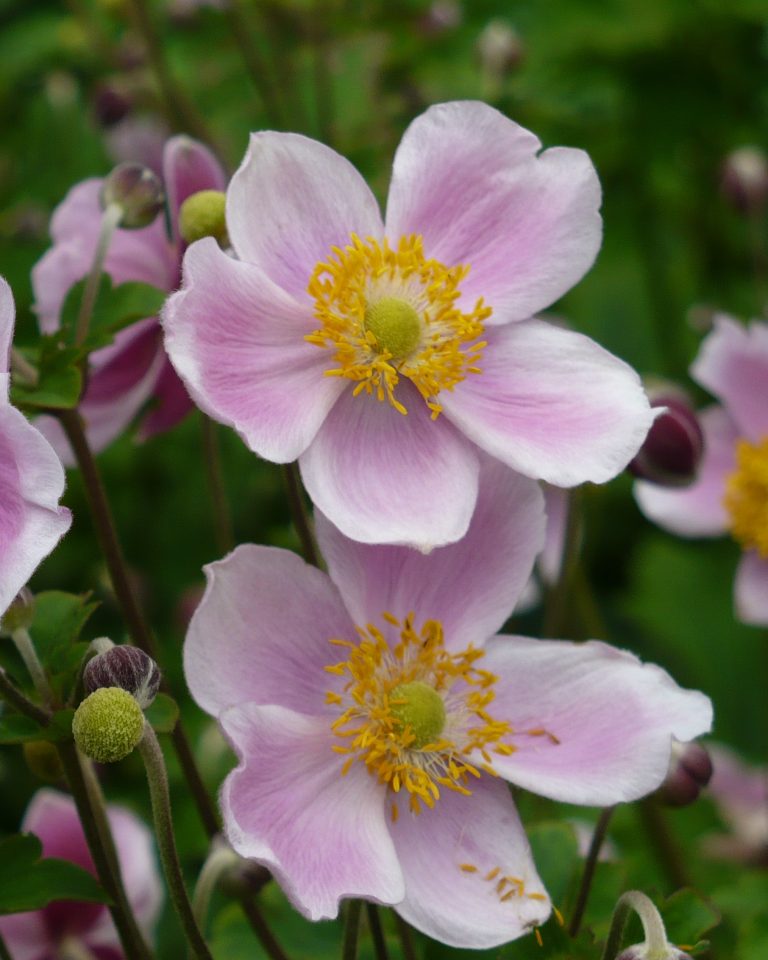
Japanese anemones carry pink or white flowers on branching stems in late summer and autumn. They prefer moist, well-drained soil and sun or partial shade. Root shoots can gradually expand a planting, and established plants are not always easy to move.
CHARACTERISTICS & ATTRIBUTES
Growing Temperature: Moderate conditions during root establishment. Avoid overheating or drying the crop before its late-season bloom.
Soil pH: Slightly acidic to neutral soil. Match the substrate to the anemone species.
Pests and Diseases: Slugs and aphids can damage Japanese-anemone shoots. Inspect shaded foliage for spotting or mildew and investigate crown collapse before dividing plants.
Potting and Timing: Avoid breaking the fine new roots during transplanting. Build a strong crown ahead of the late-summer or fall flowering window.
Moisture: Keep growing anemones moderately moist, with drainage. Reduce water when the identified species loses foliage and enters dormancy.
Planting Level: Set the plug even with the media surface. Plant roots just below media surface.
PGRs/Pinching: Do not routinely pinch spring crown growth. Cut old flower stems after bloom and keep spreading roots contained.
Lighting: Sun to partial shade; afternoon shade is helpful when summer moisture is limited.