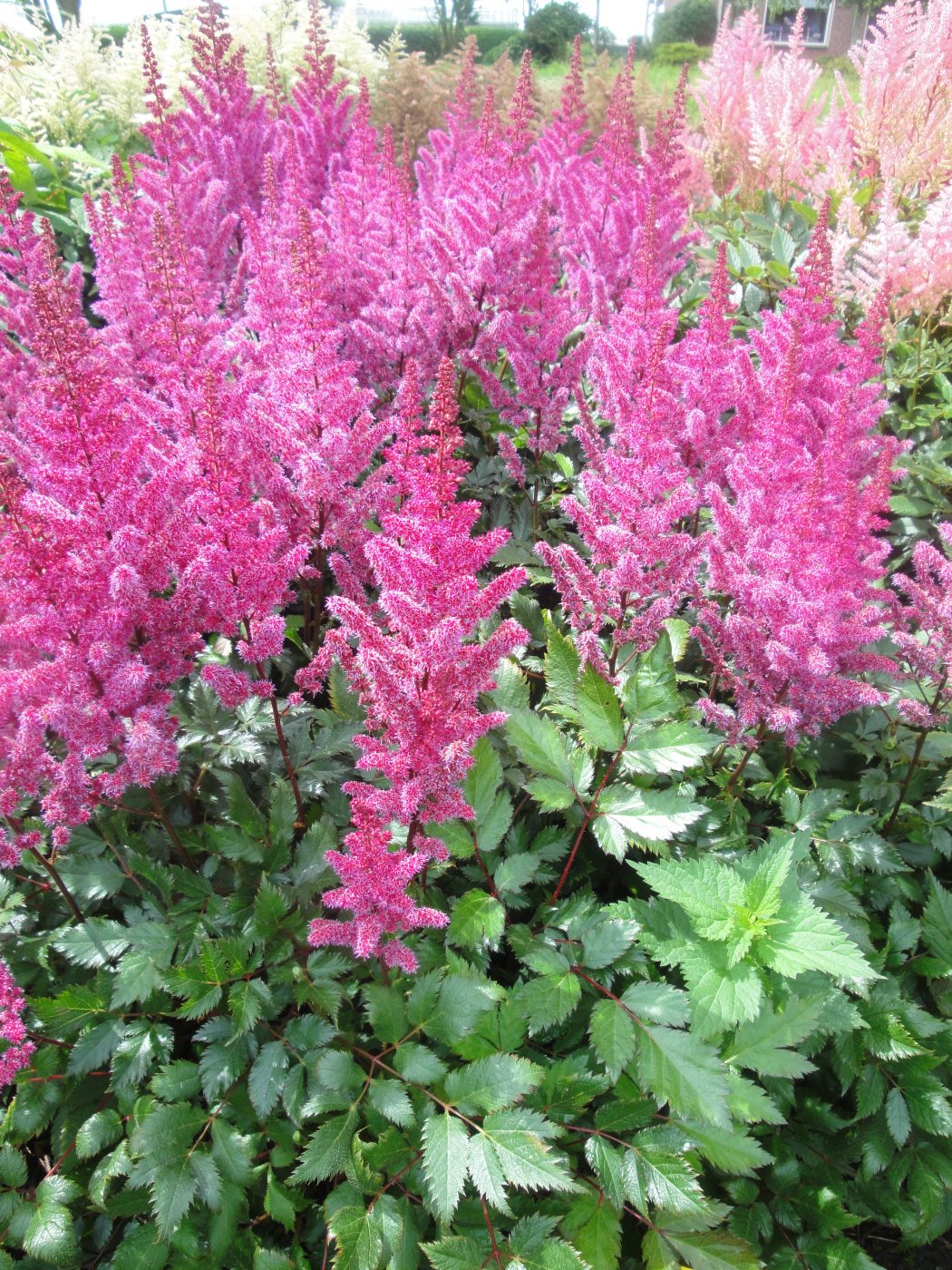
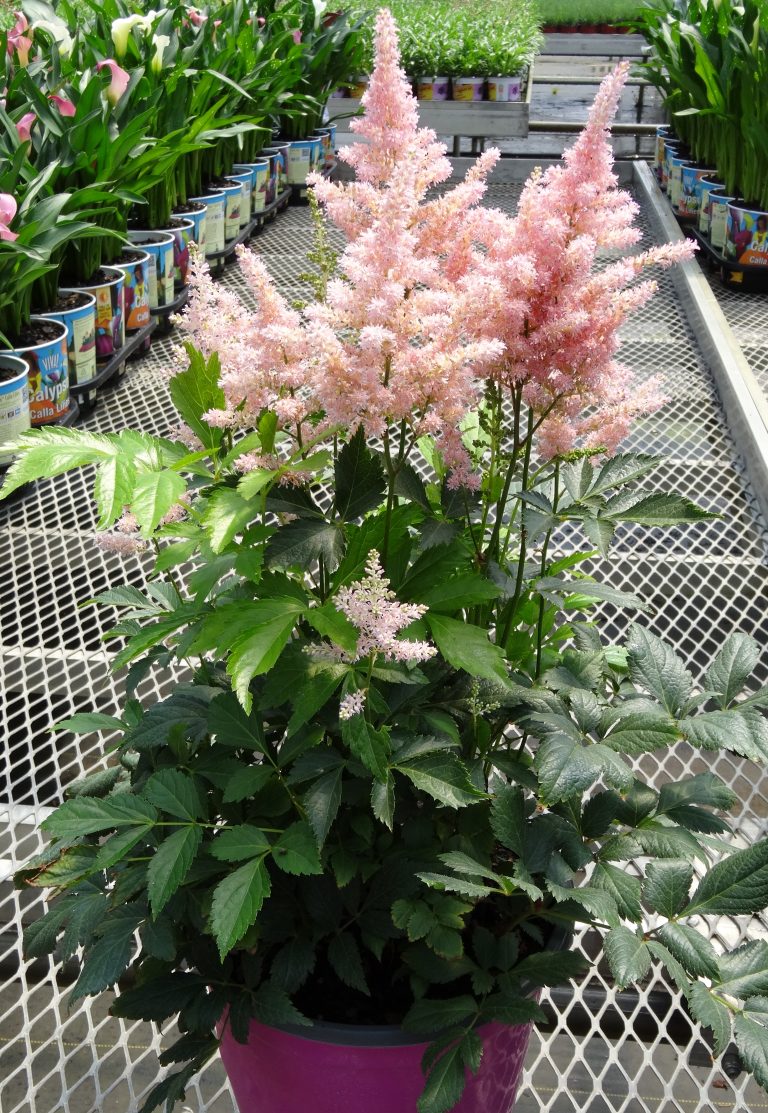
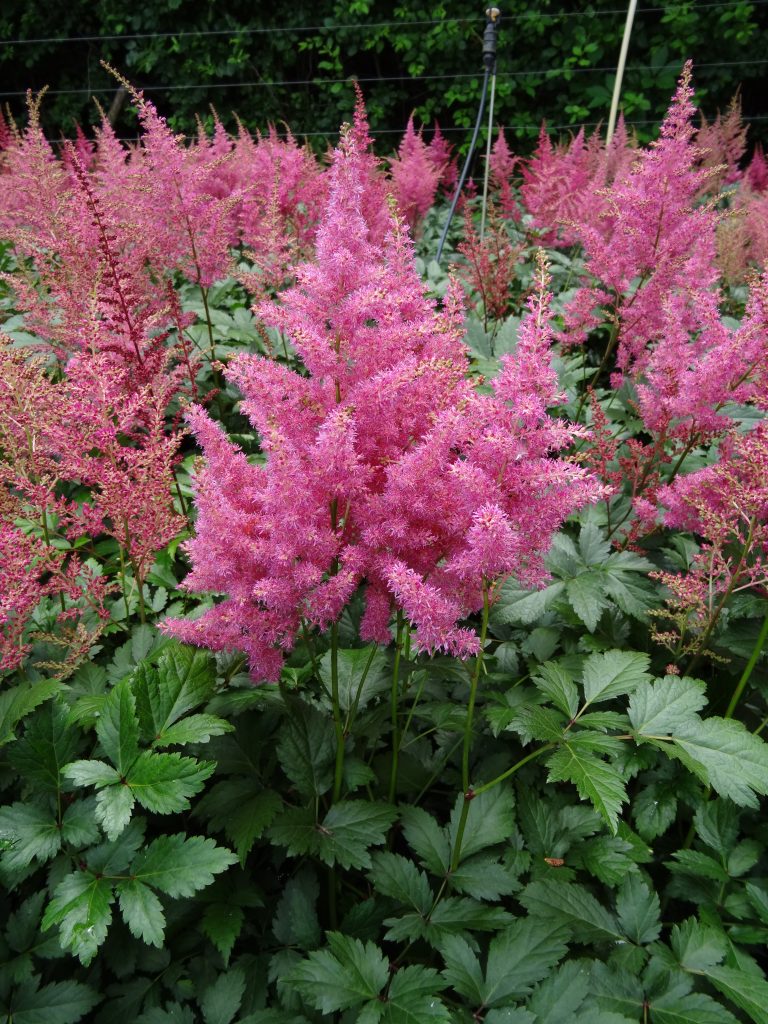
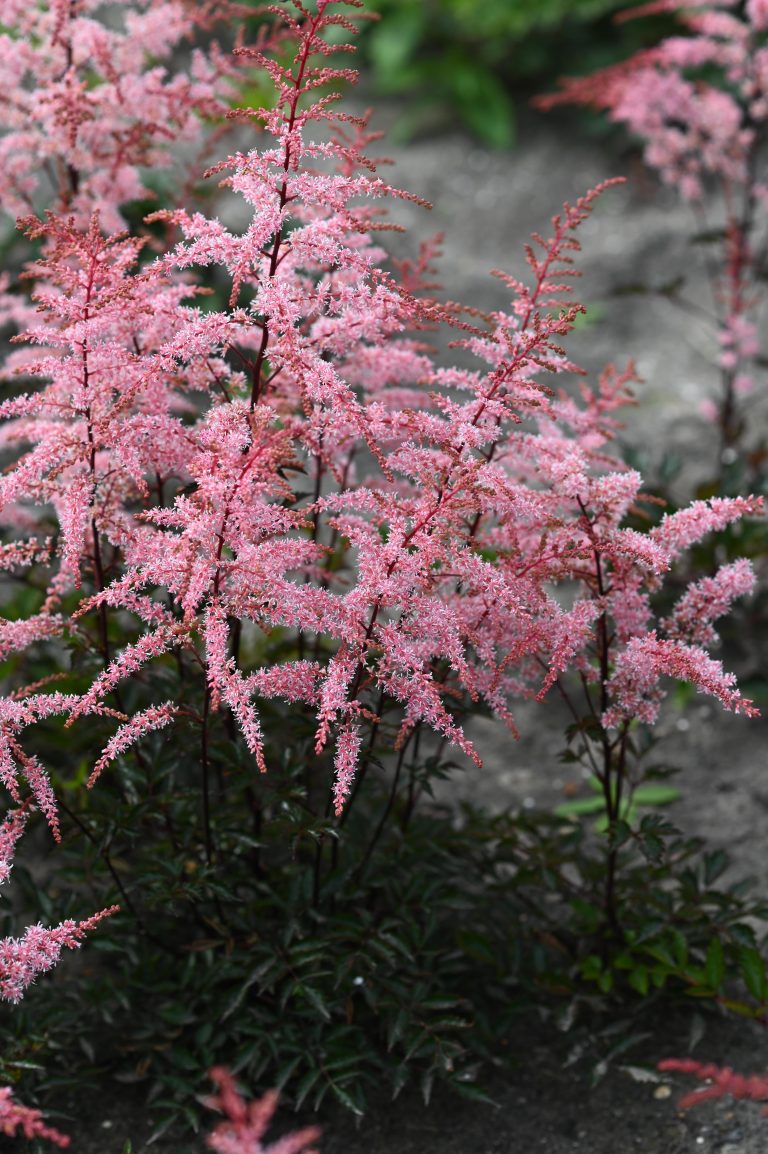
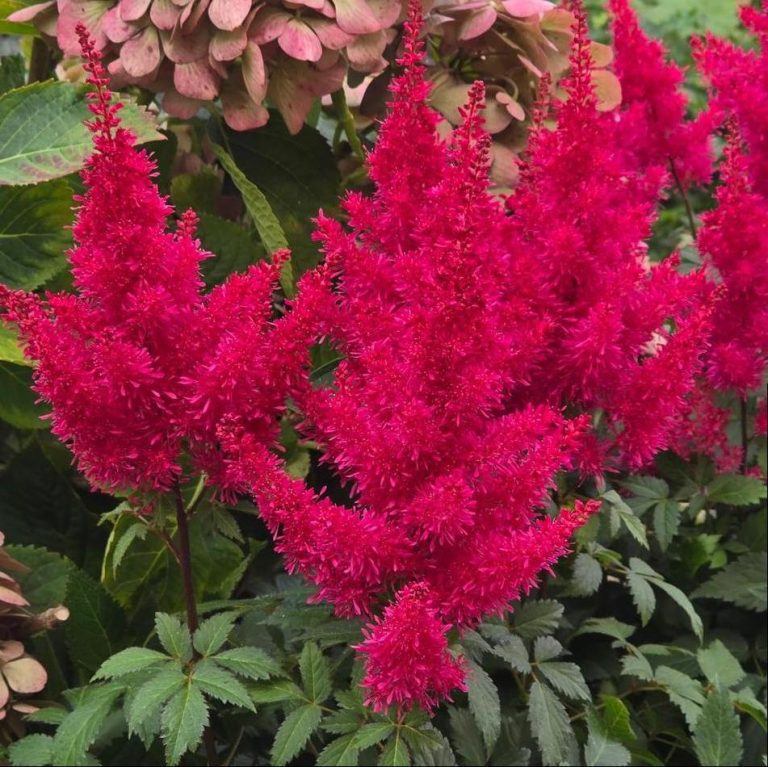
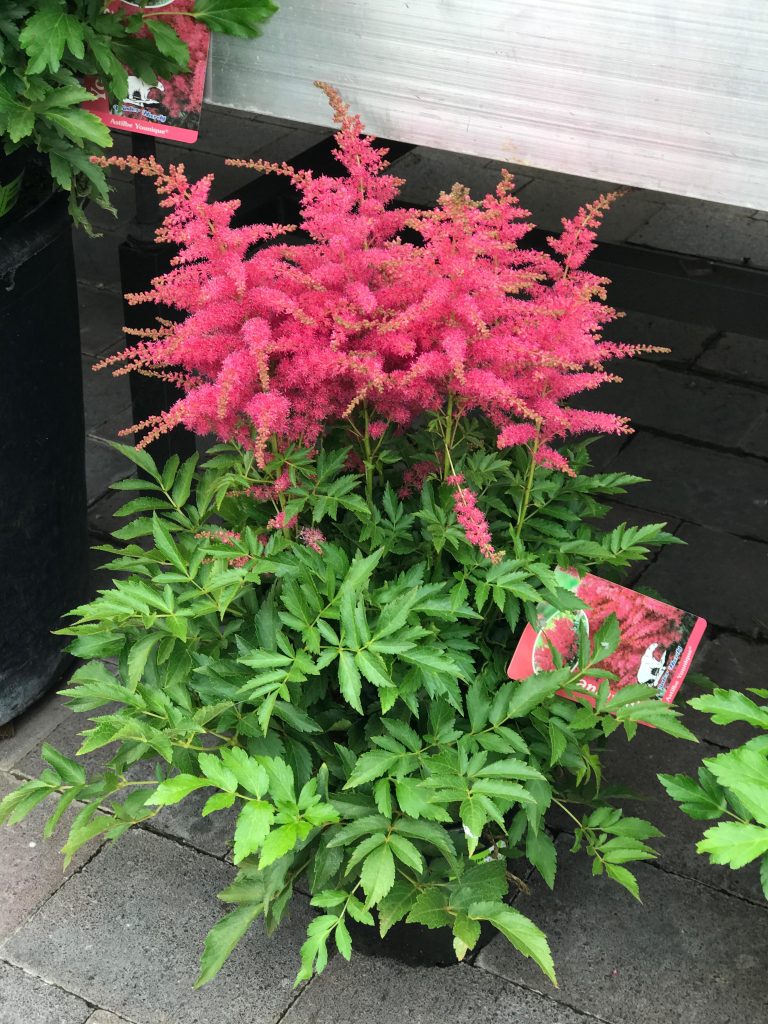
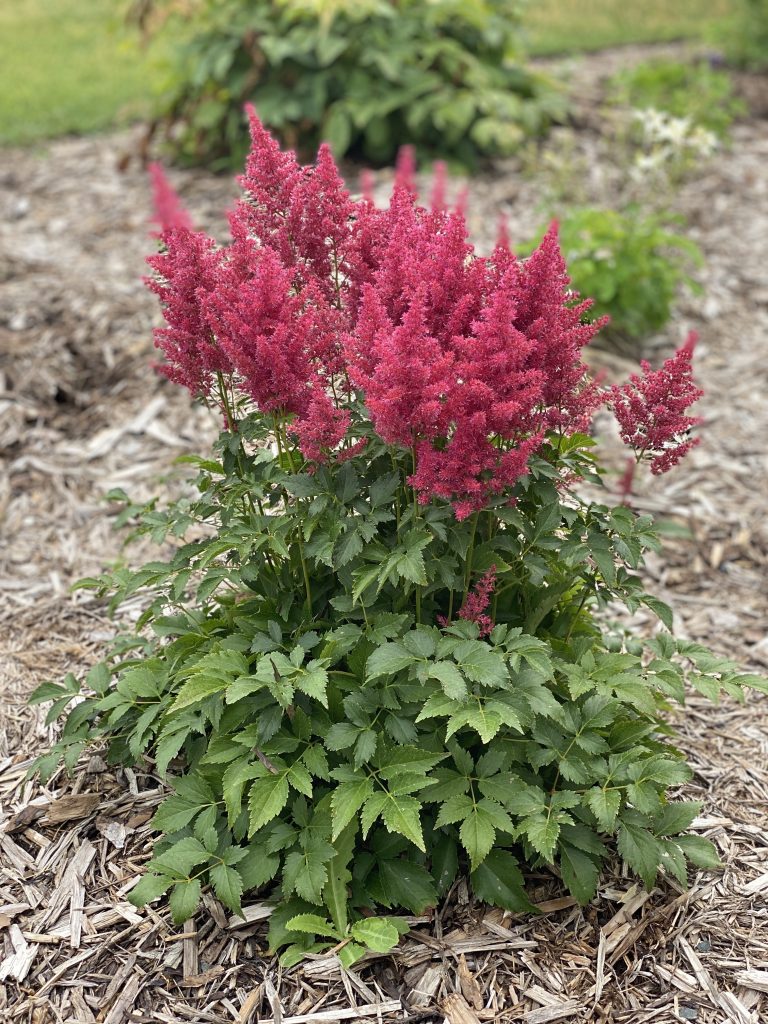
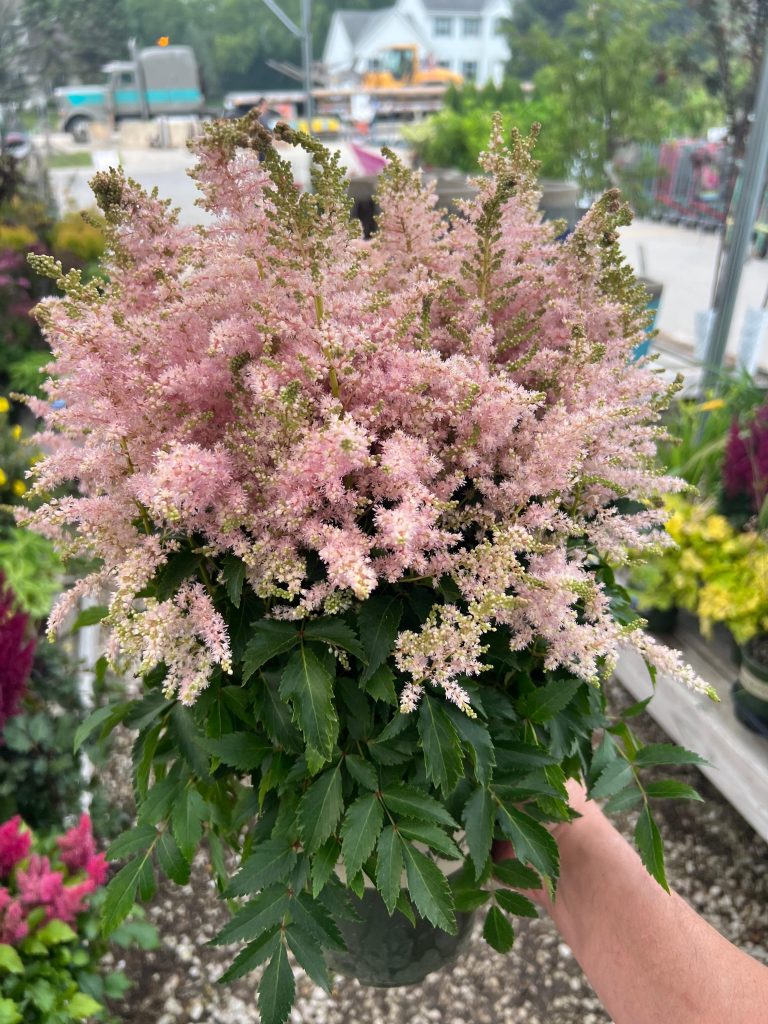
Astilbes produce feathery flower plumes above divided foliage in late spring and summer. Arendsii, japonica, chinensis and simplicifolia groups differ in height, bloom time and plume shape. All benefit from reliable moisture; chinensis selections often tolerate somewhat drier conditions once established.
CHARACTERISTICS & ATTRIBUTES
Growing Temperature: 55–60°F for the published Astilbe finishing program.
Soil pH: 5.8–6.2 for Astilbe container production.
Pests and Diseases: Astilbe may develop leaf spots, mildew or crown decay. Check emerging foliage for chewing damage and recognize that dry roots can cause brown, crinkled leaves.
Potting and Timing: Pot dormant crowns promptly and keep roots from drying during handling. Use cold-treated material when forcing a predictable spring flowering crop.
Moisture: Water Astilbe after potting and keep roots consistently moist. Increase frequency as leaves expand; a dry root ball can cause brown, crinkled foliage.
Planting Level: Set the eyes about ½ in below the media surface and fan the fibrous roots through the substrate.
PGRs/Pinching: Do not pinch. Remove spent plumes only after their ornamental value fades.
Lighting: Partial shade; morning sun is useful, but hot afternoon exposure raises water demand sharply.