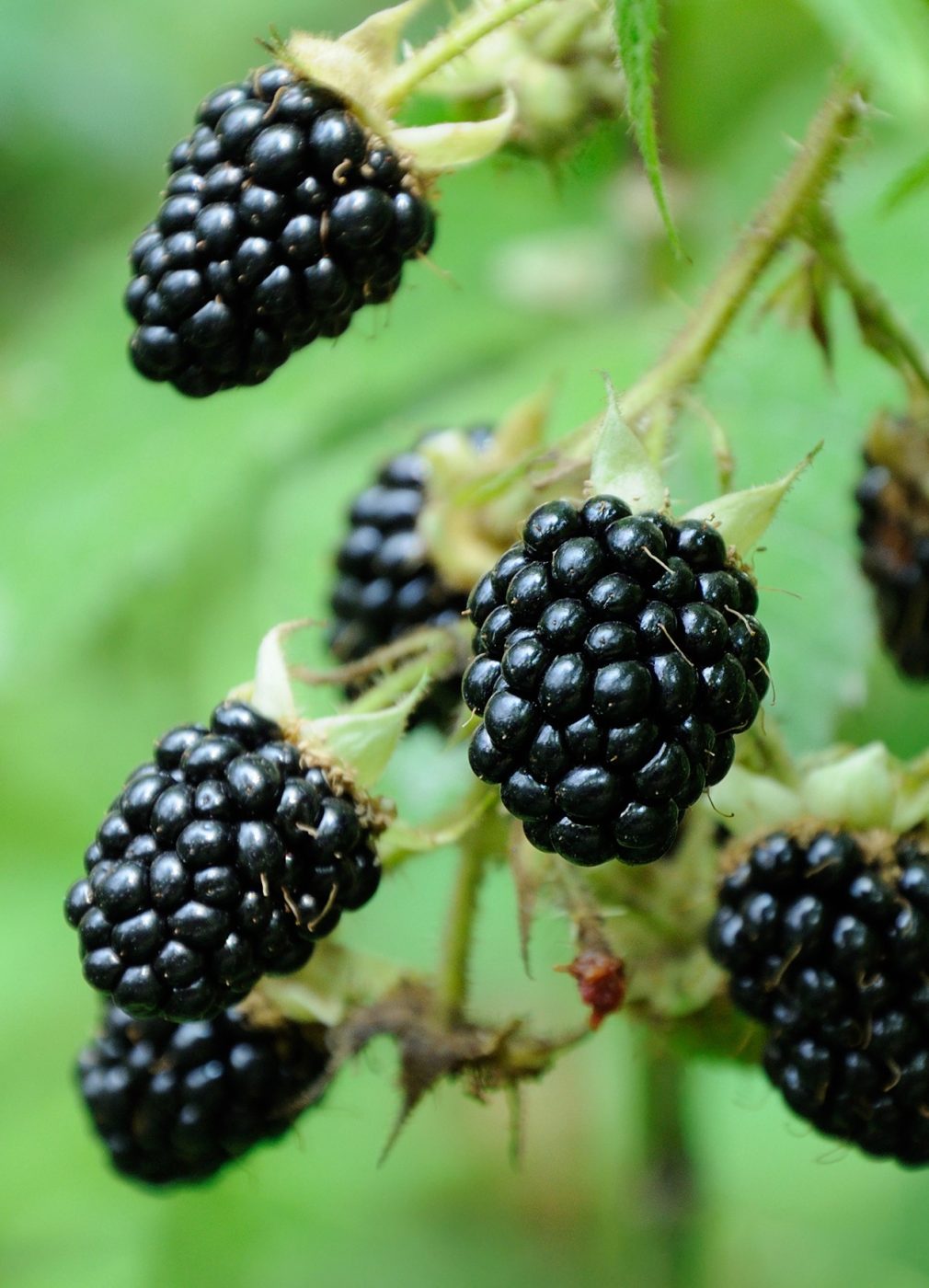
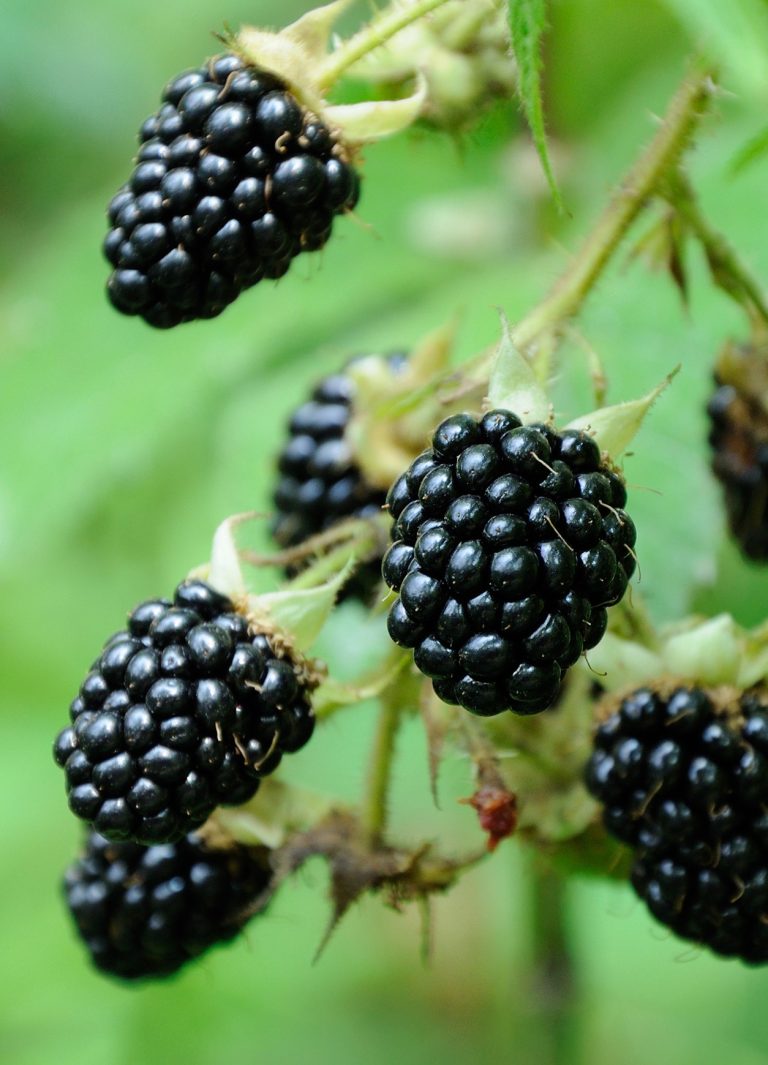
Blackberries bear clusters of edible fruit on arching or upright canes. Choose support and pruning methods for the cultivar's growth habit and whether it fruits on first- or second-year canes. Allow enough space to harvest and manage new shoots.
CHARACTERISTICS & ATTRIBUTES
Growing Temperature: Grow actively through the frost-free season. Overwintering and fruiting schedules depend on cultivar and cane age.
Soil pH: Slightly acidic soil is preferred for blackberries. Use a fruit-crop soil test for amendments.
Pests and Diseases: Scout for cane borers, aphids, mites, Japanese beetles and spotted-wing drosophila; anthracnose, cane blight and root rot are the principal diseases.
Potting and Timing: Use true-to-type, clean nursery stock and identify primocane- versus floricane-fruiting cultivars. A new container crop need not bear fruit to be ready for planting.
Moisture: Water blackberry roots steadily during new cane growth and fruit fill. Allow drainage and avoid alternating severe wilt with saturation.
Planting Level: Set the crown or root flare at the original media line; spread bare roots naturally rather than bending them upward.
PGRs/Pinching: Retain canes according to fruiting type. Remove spent floricanes after harvest; tip-prune only where the cultivar's training system calls for it.
Lighting: Full sun with good spacing through the cane canopy.