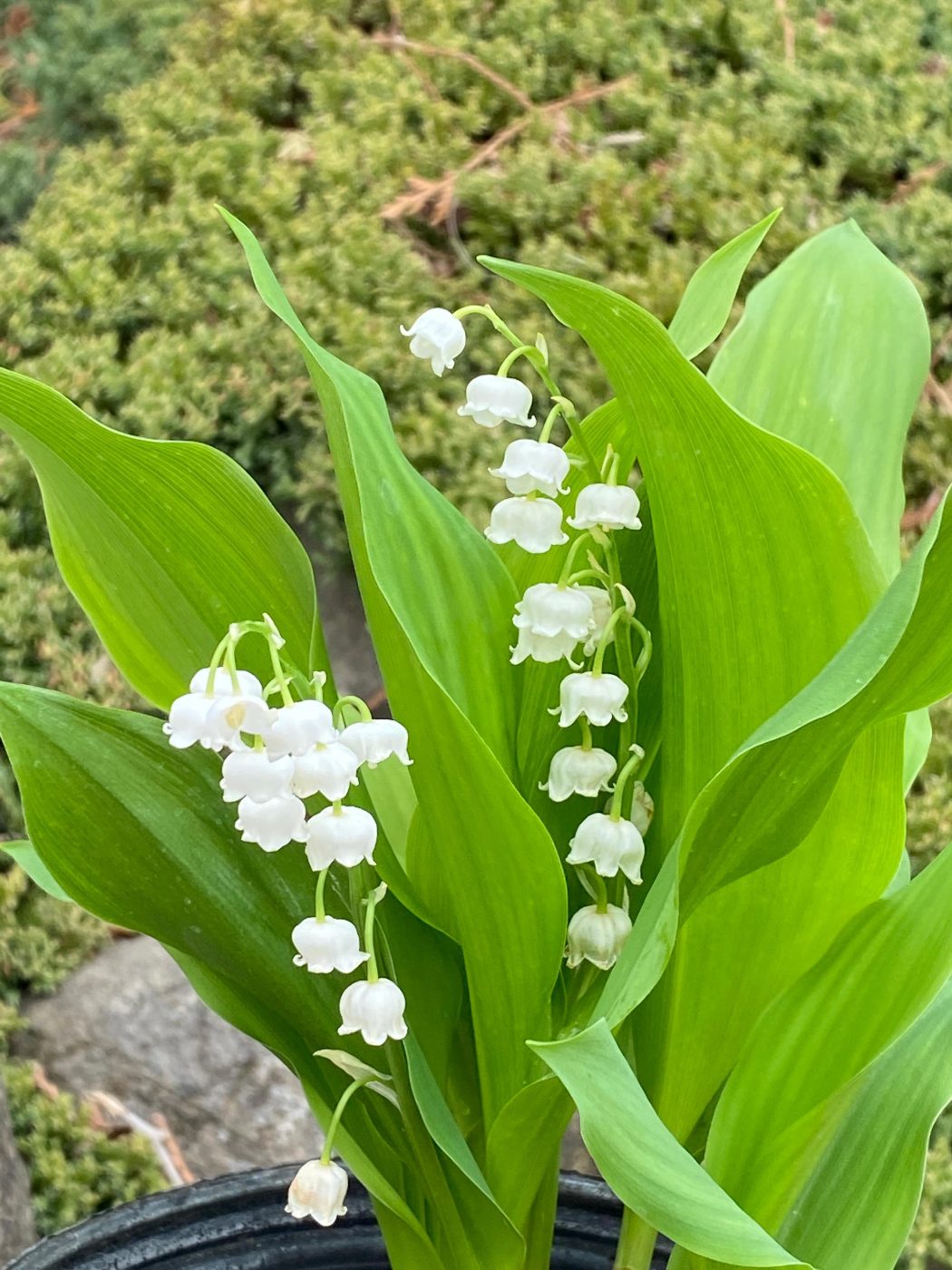
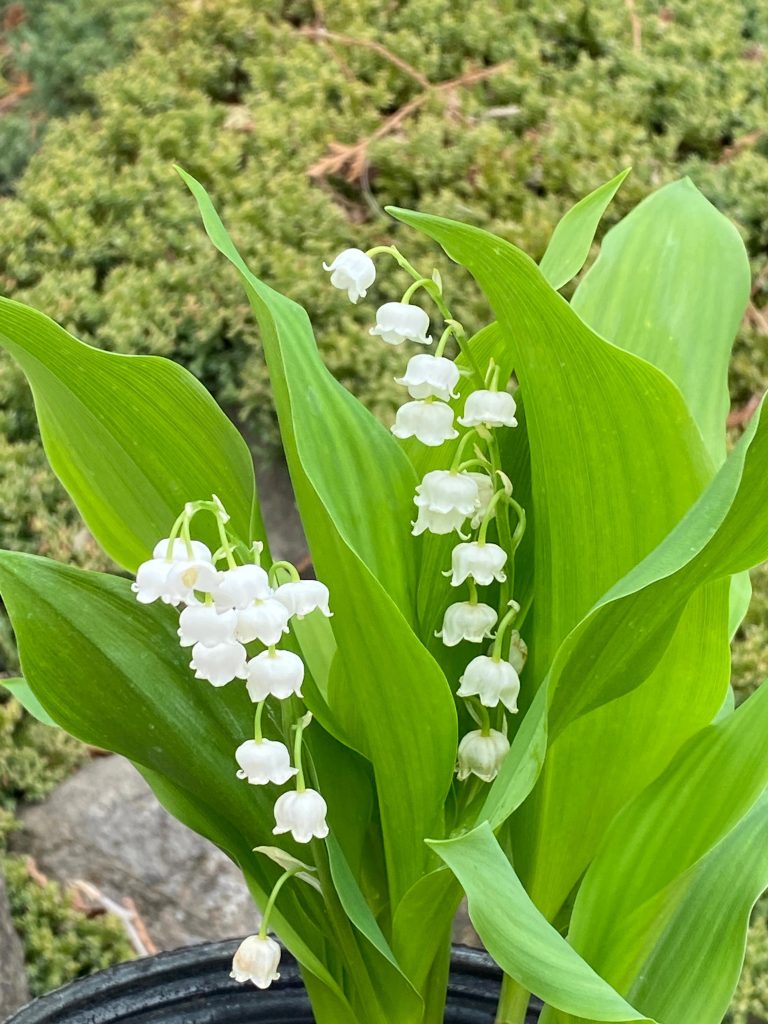
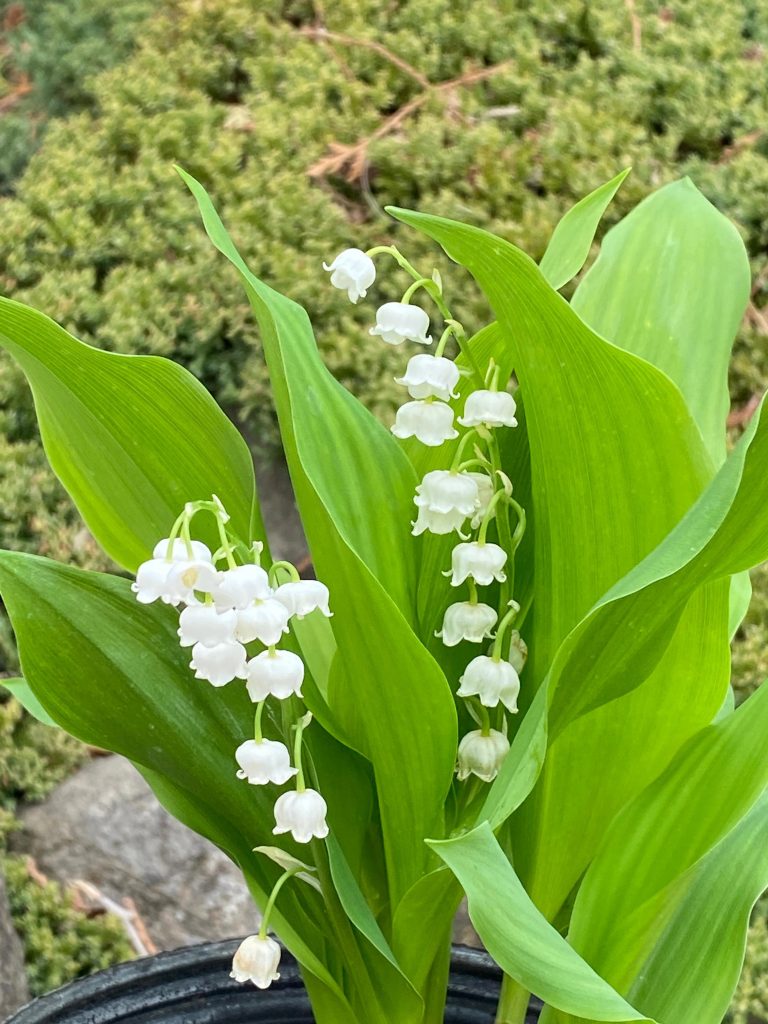
Lily-of-the-valley spreads by underground rhizomes and bears fragrant white spring bells above paired leaves. It suits shaded, moist ground but can expand beyond its original bed. The plants and berries are poisonous.
CHARACTERISTICS & ATTRIBUTES
Growing Temperature: Cool spring growth is normal. Prepared forcing pips require a separate temperature program from ordinary divisions.
Soil pH: Acidic to neutral woodland soil is suitable. Prepared forcing pips may use a specialized mix.
Pests and Diseases: Check lily-of-the-valley shoots for slug damage and leaves for spotting. Reject soft or diseased pips before planting.
Potting and Timing: Plant pips in a shallow-rooted, moisture-retentive mix. Special forcing requires prepared pips; ordinary divisions follow their seasonal spring cycle.
Moisture: Keep lily-of-the-valley roots moist during spring growth and flowering. Established shaded groundcover tolerates more fluctuation than newly potted pips.
Planting Level: Spread the roots downward and position the pip tip just beneath the media surface. Do not pack wet mix tightly around the emerging shoot.
PGRs/Pinching: No pinching. Let leaves replenish rhizomes after the flowers fade.
Lighting: Partial to full shade; avoid hot, dry afternoon sun.