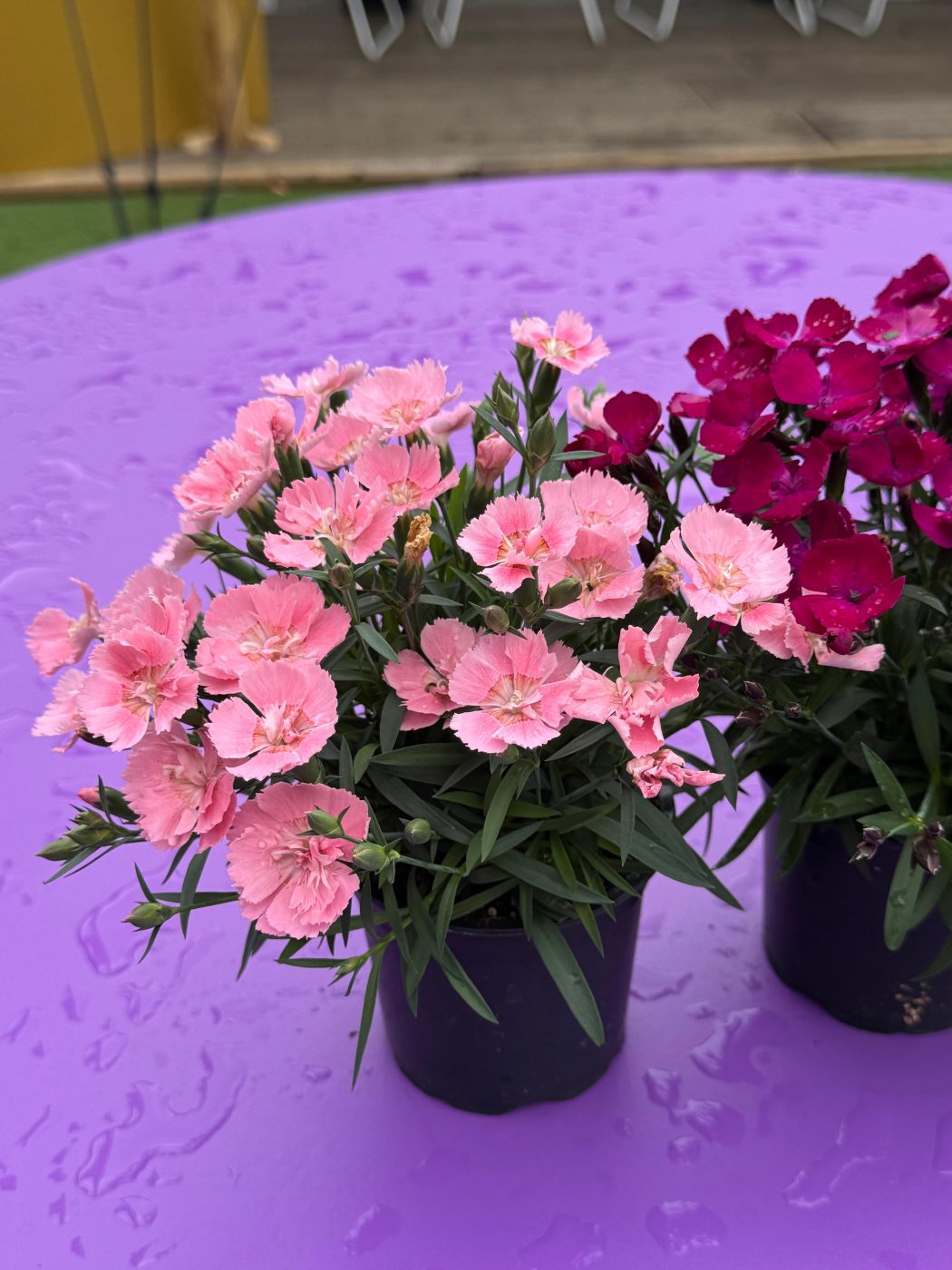
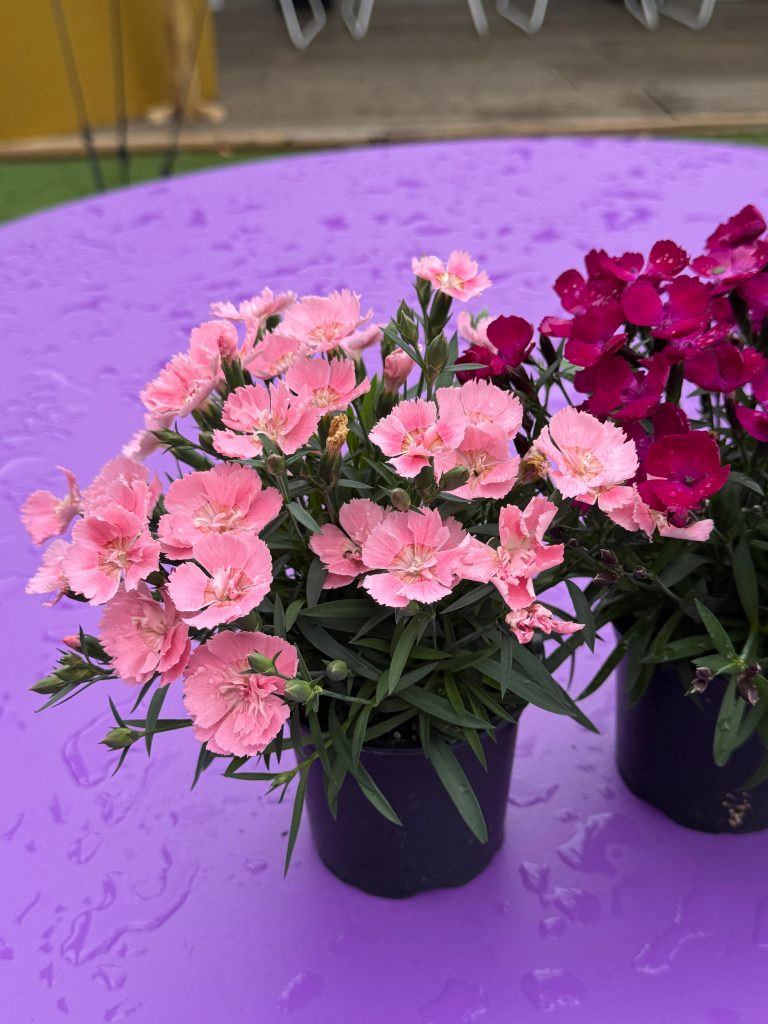
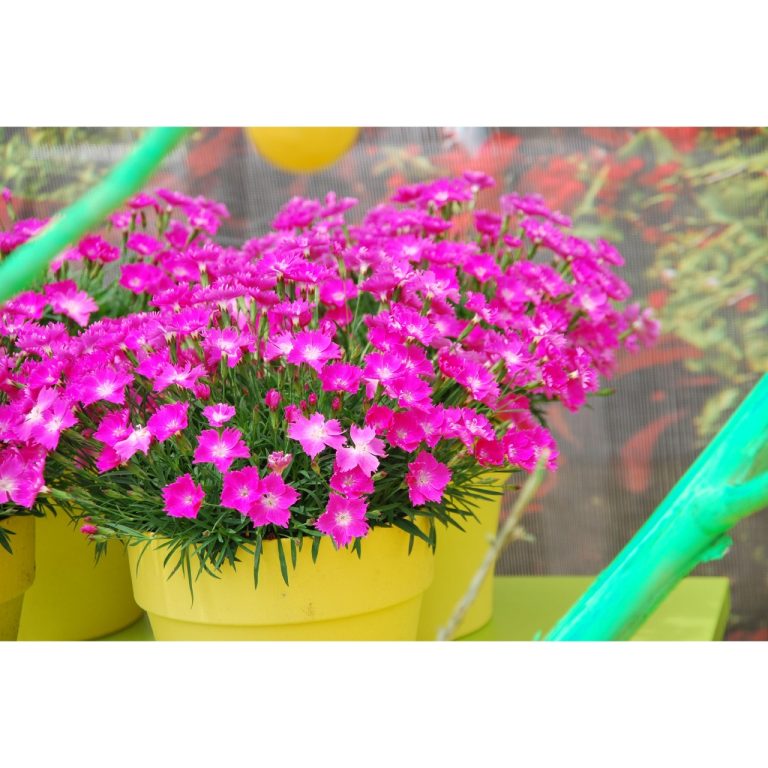
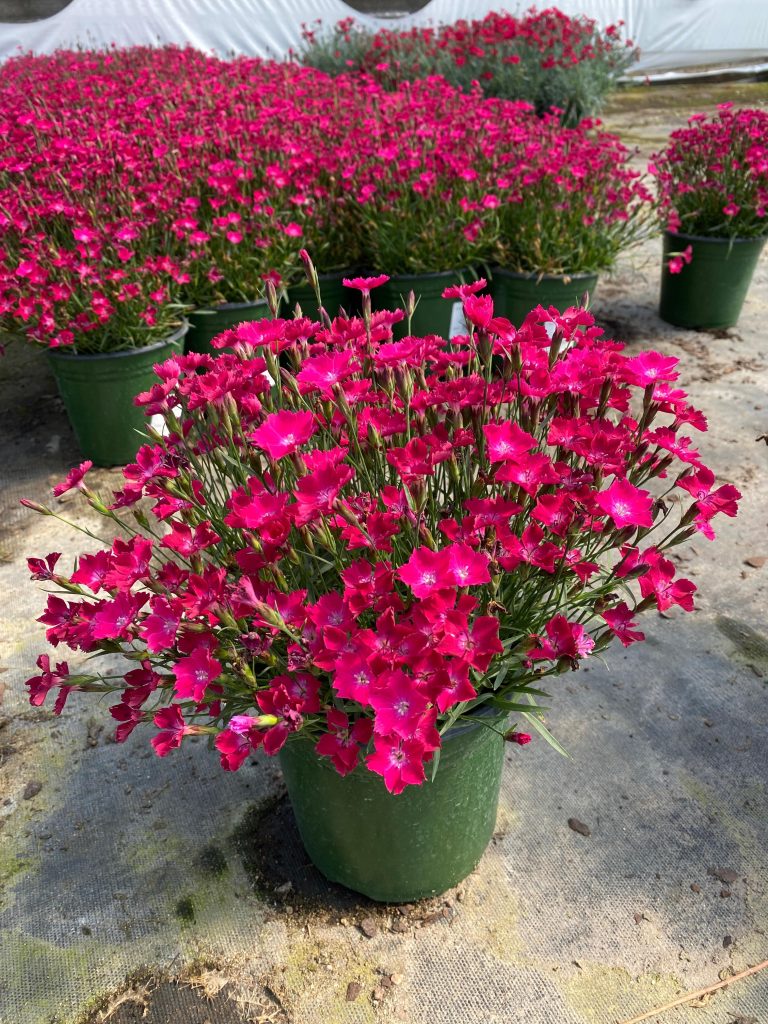
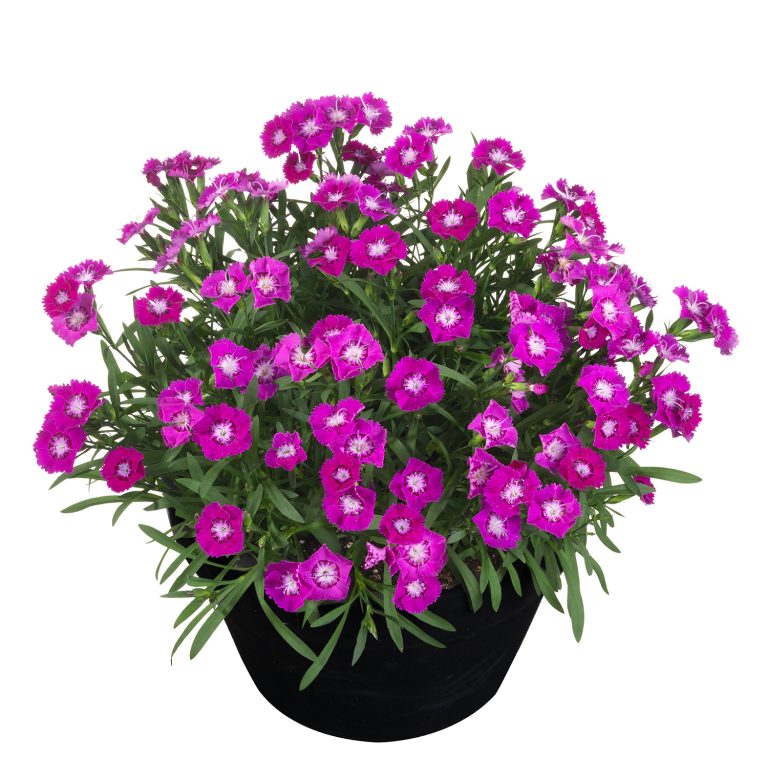
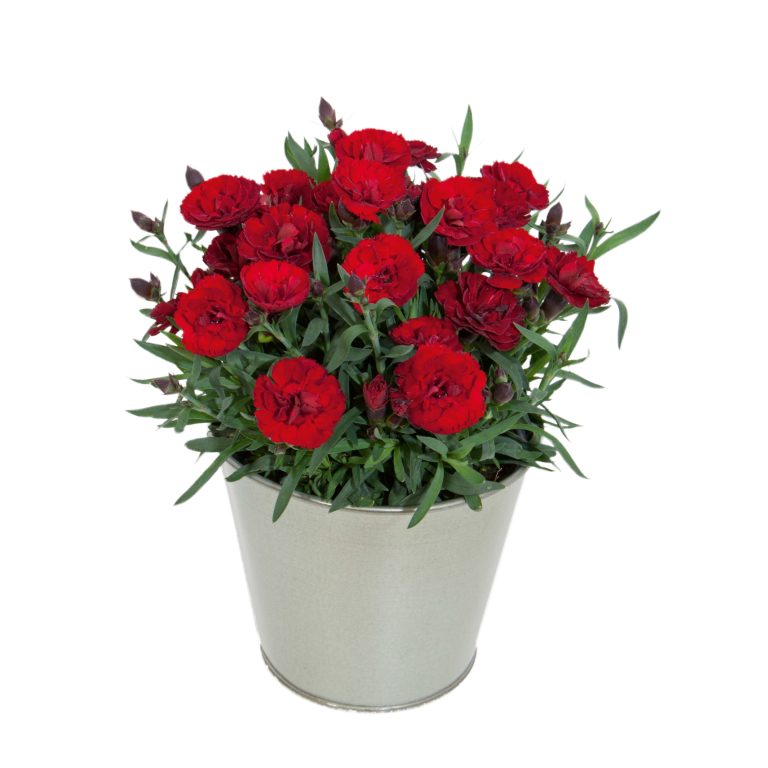
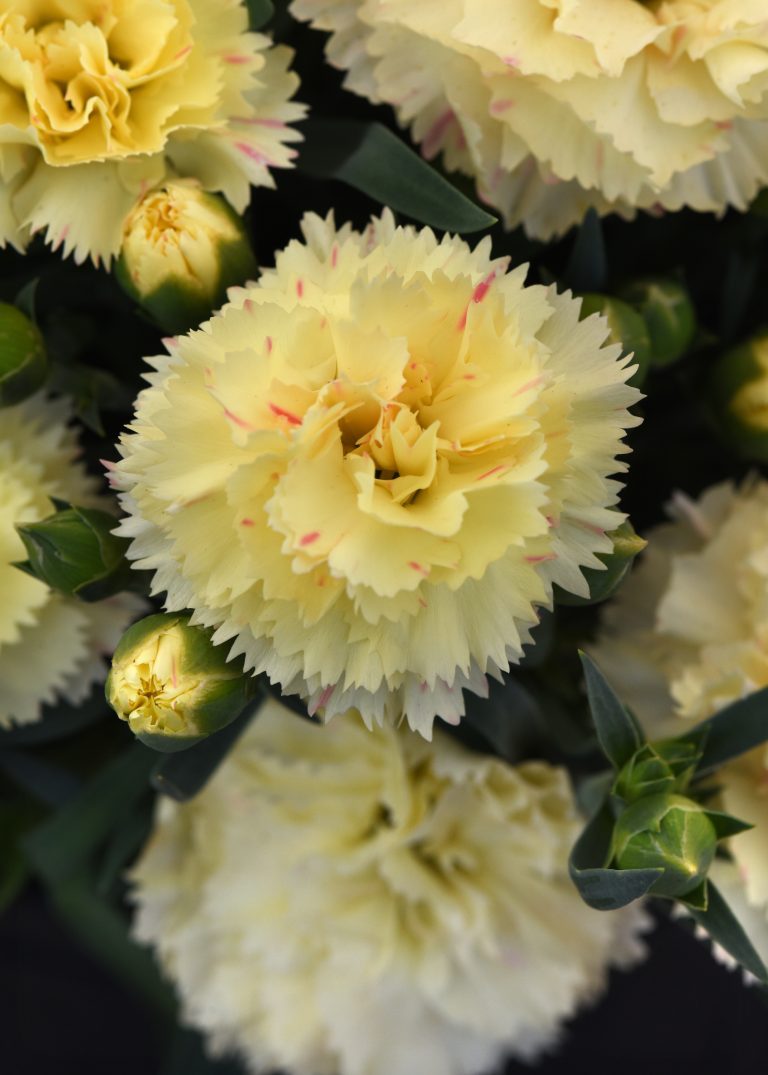
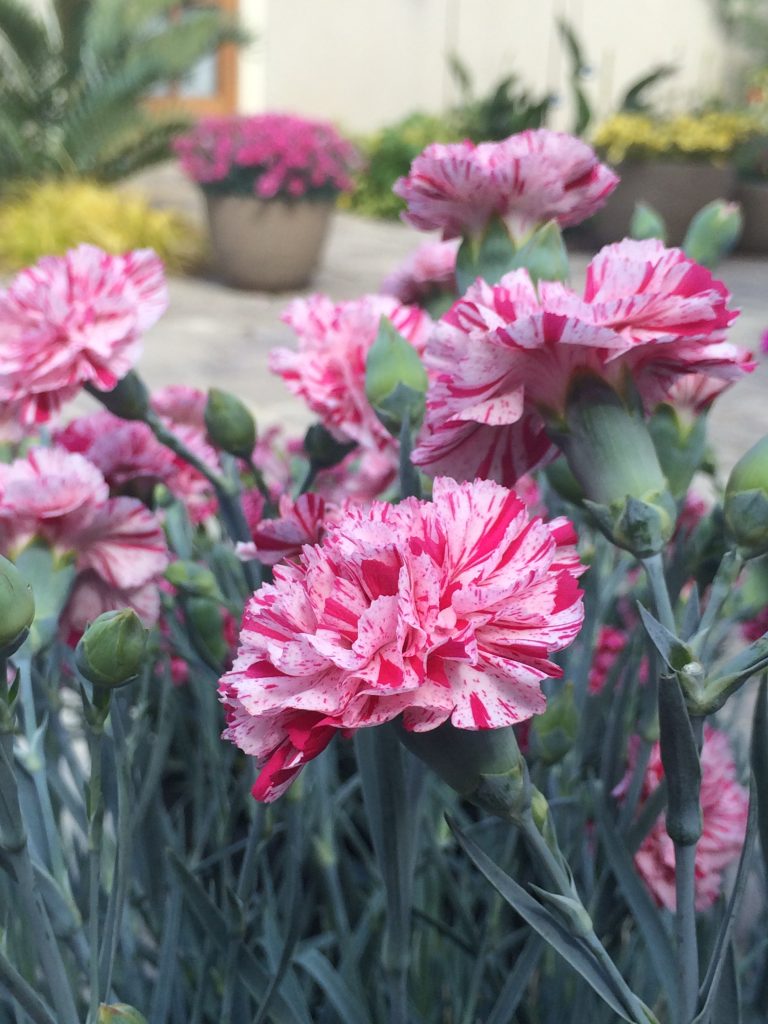
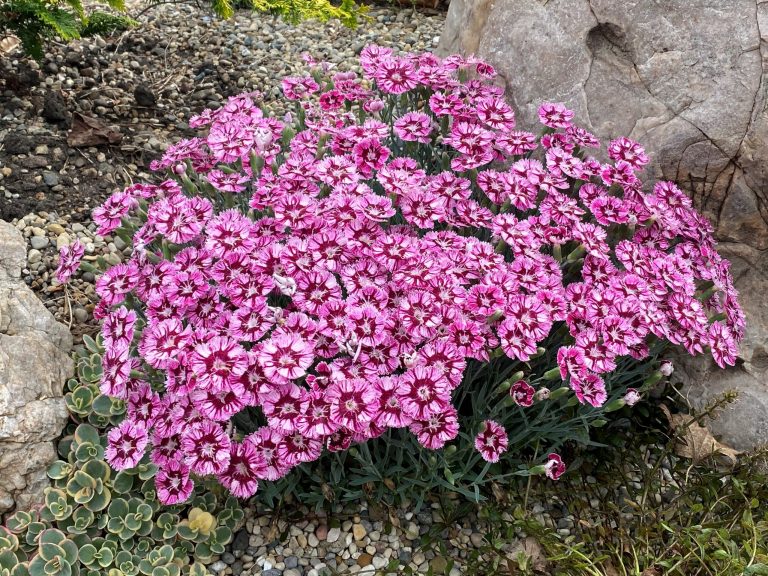
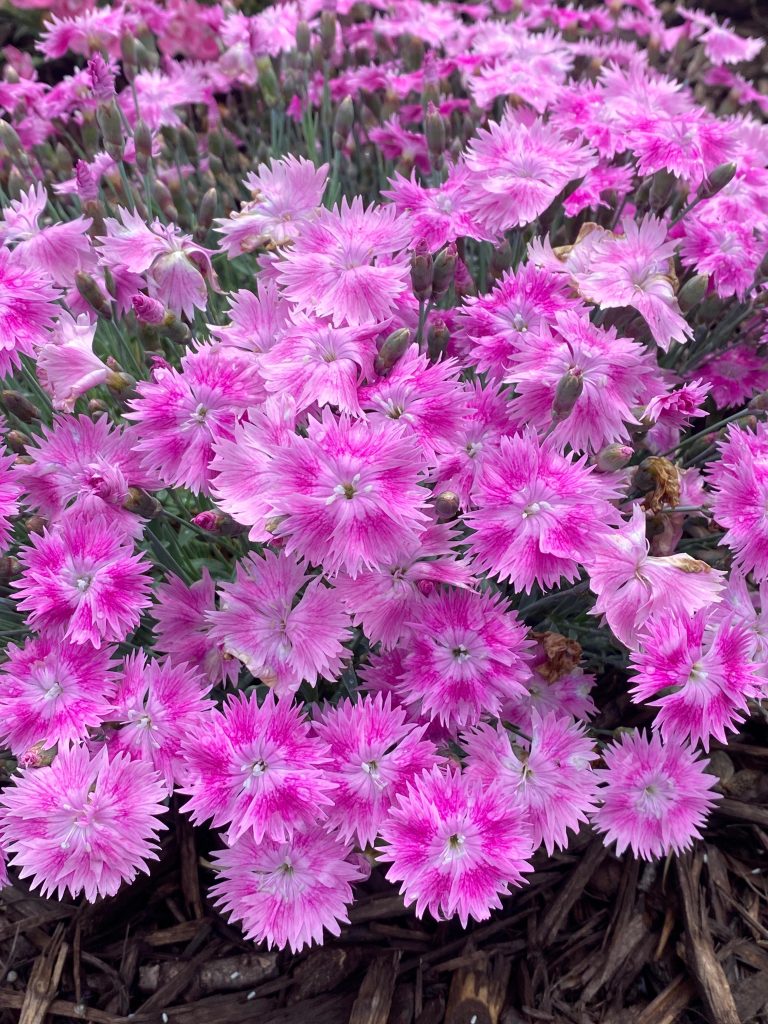
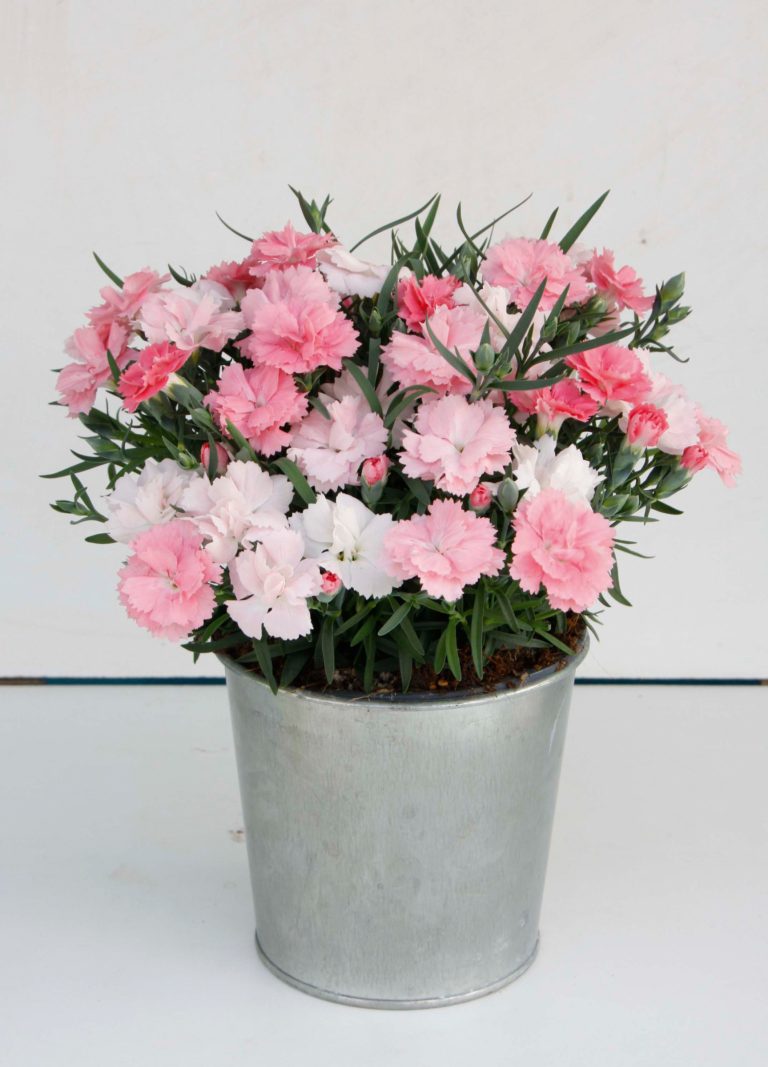
Garden pinks include low mats, tufted clumps and compact carnation hybrids. Many flower heavily in spring, with repeat bloom depending on the cultivar. Their narrow leaves and fringed flowers suit sunny beds and containers. All need good drainage around the crown.
CHARACTERISTICS & ATTRIBUTES
Growing Temperature: Finish perennial pinks cool to moderate. Carnation hybrids and first-year series may use different temperature programs.
Soil pH: Neutral to mildly alkaline garden soil suits many pinks. Use the series-specific pH range for carnation and pot-Dianthus production.
Pests and Diseases: Thrips, aphids and mites may affect pinks. Fusarium wilt, rust, leaf spots and crown or root rots warrant clean propagation stock and good drainage.
Potting and Timing: Set the basal crown above wet media and use the supplier's vernalization guidance. Compact pot carnations and perennial pinks do not share one schedule.
Moisture: Water perennial pinks thoroughly, then allow the upper mix to dry. Keep crowns drained, with a separate schedule for carnation and pot-Dianthus crops.
Planting Level: Plant at the original liner depth with the crown even with the media surface.
PGRs/Pinching: Pinch only series that require it. Deadheading is usually more useful than repeatedly shearing a flowering crop.
Lighting: Full sun or high greenhouse light for sturdy stems.