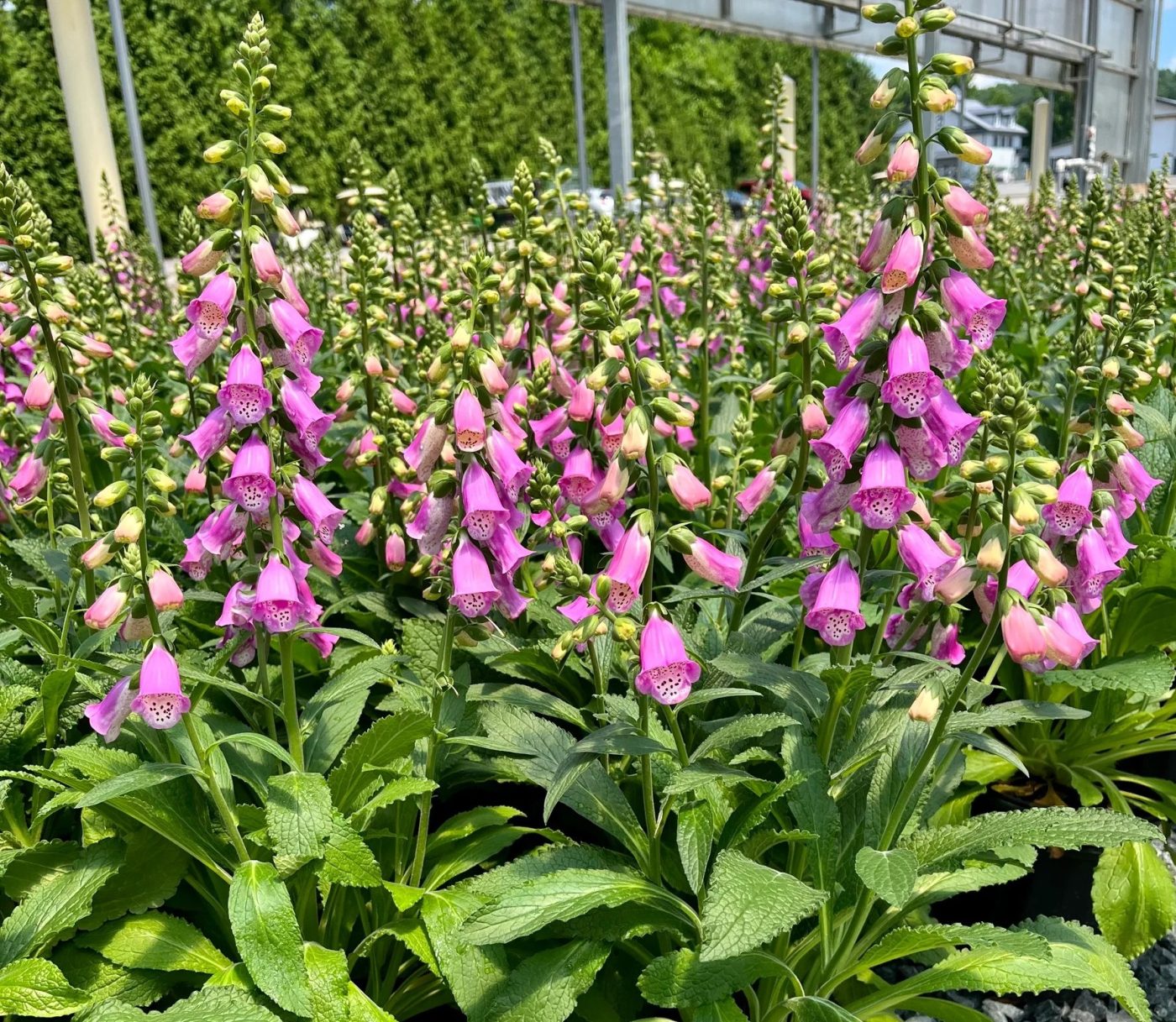
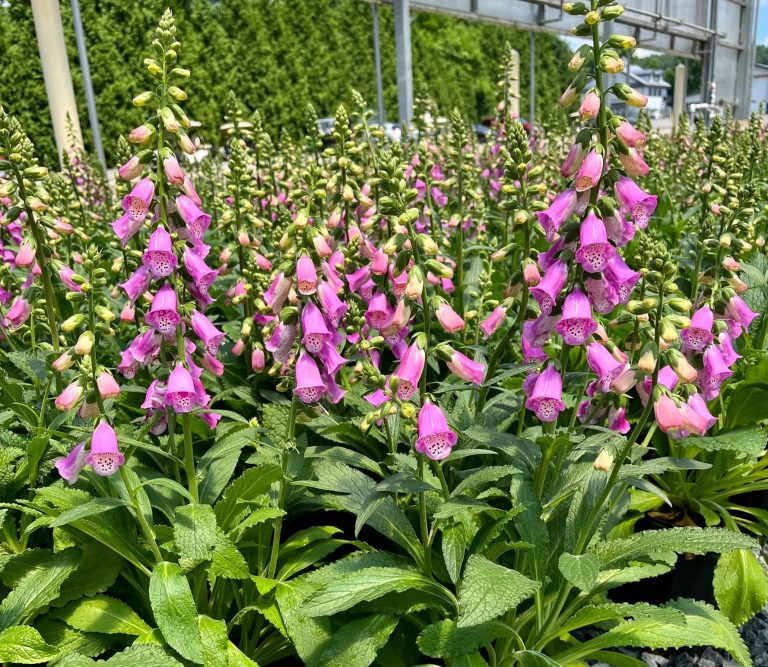
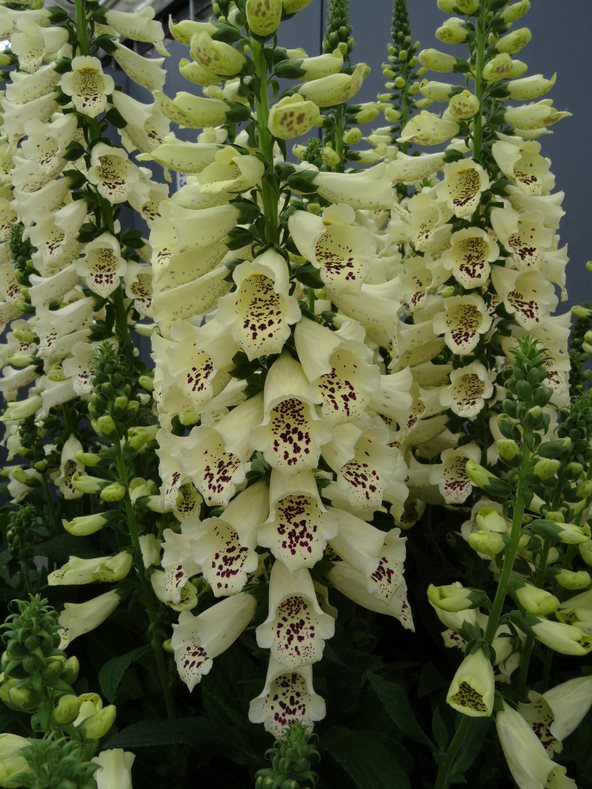
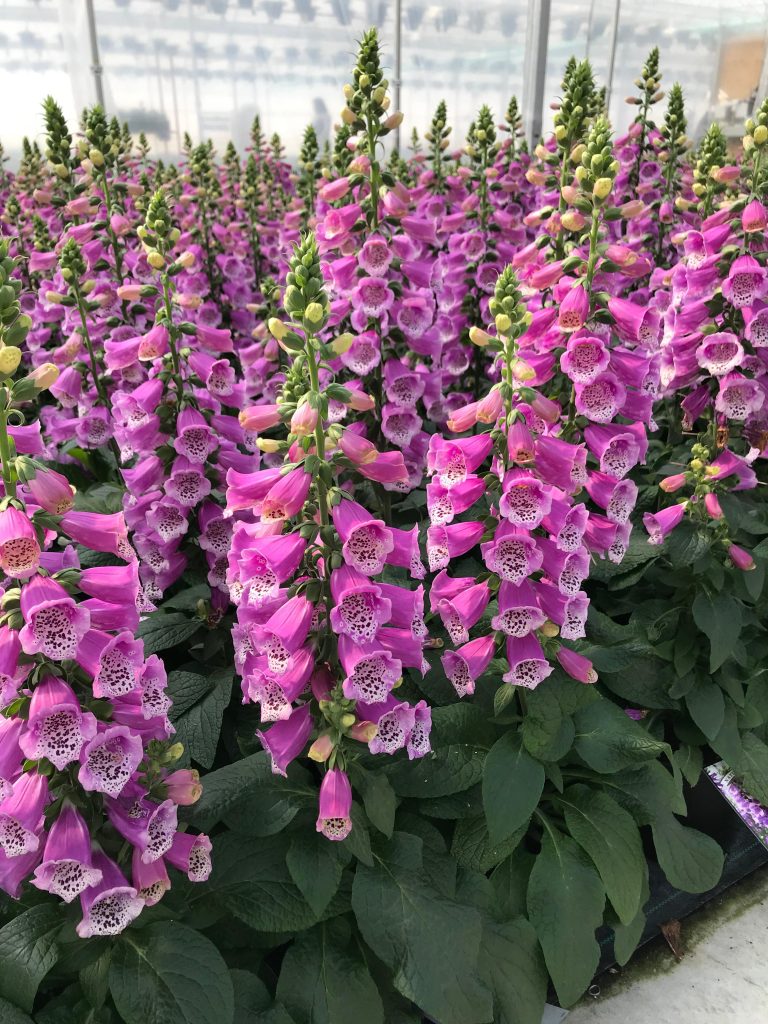
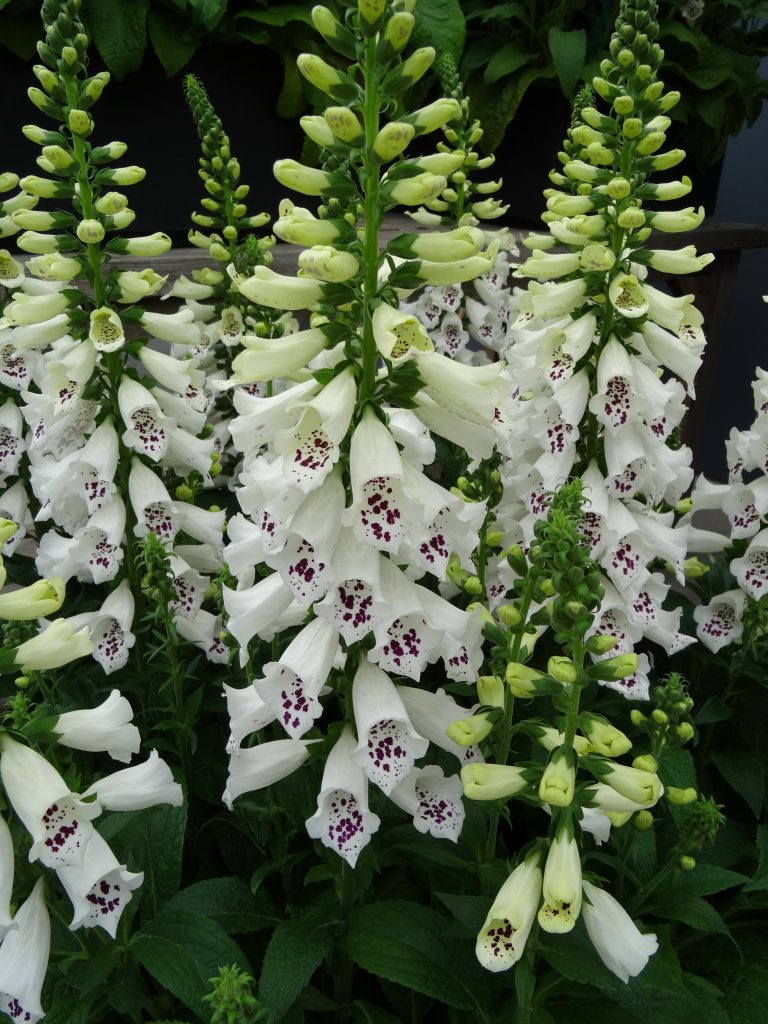
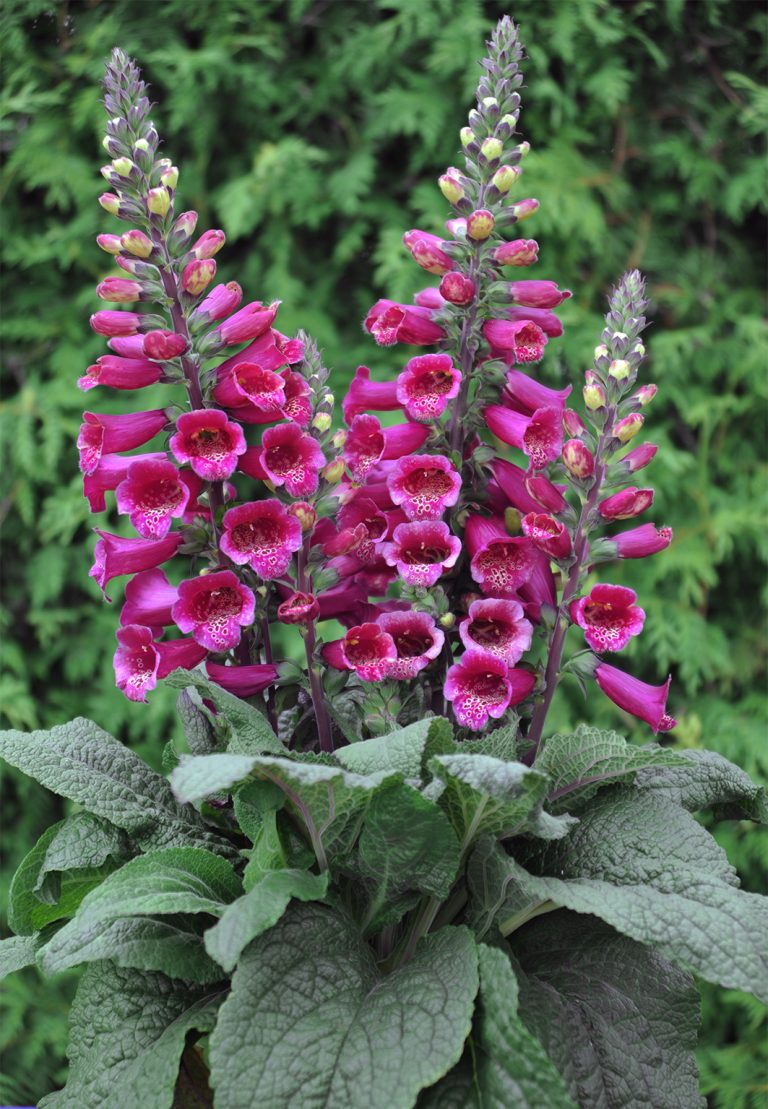
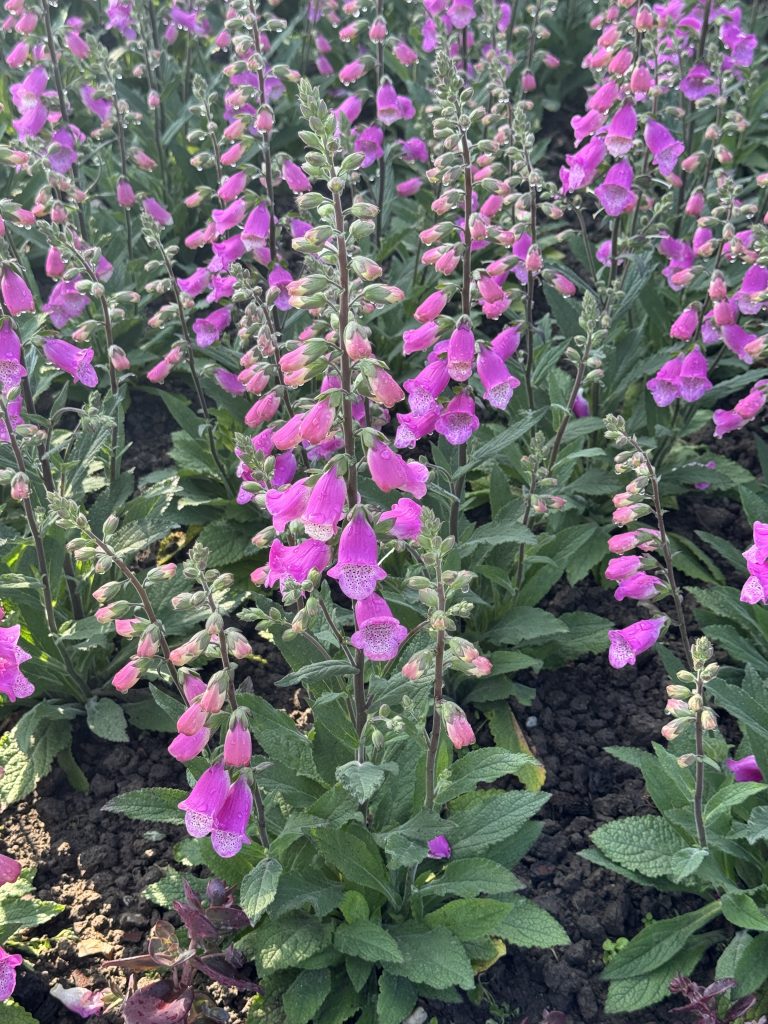
Foxgloves produce upright spikes of tubular flowers above leafy rosettes. D. purpurea is usually biennial or short-lived, while D. grandiflora and some other species are perennial. Flowering in the first year depends on the strain. All parts are poisonous.
CHARACTERISTICS & ATTRIBUTES
Growing Temperature: Cool to moderate growth. Determine whether the foxglove series needs winter cold or flowers without it.
Soil pH: Species-dependent. D. purpurea favors acidic soil; some perennial foxgloves tolerate lime.
Pests and Diseases: Foxgloves may develop aphids, leaf spots, mildew or crown rot. Keep basal rosettes open and reject decaying propagation material.
Potting and Timing: Determine whether the foxglove series flowers in year one or requires a cold period. A small rosette and a vernalized liner are not equivalent starts.
Moisture: Water foxglove roots regularly as leaves and flower stems develop. Drain well and avoid keeping the basal rosette saturated.
Planting Level: Plant at the original liner depth with the crown even with the media surface.
PGRs/Pinching: Do not pinch the central flower spike. Remove it after bloom only if secondary flowering or reduced seed set is wanted.
Lighting: Sun in cool climates to partial shade; avoid deep shade that weakens flower stems.