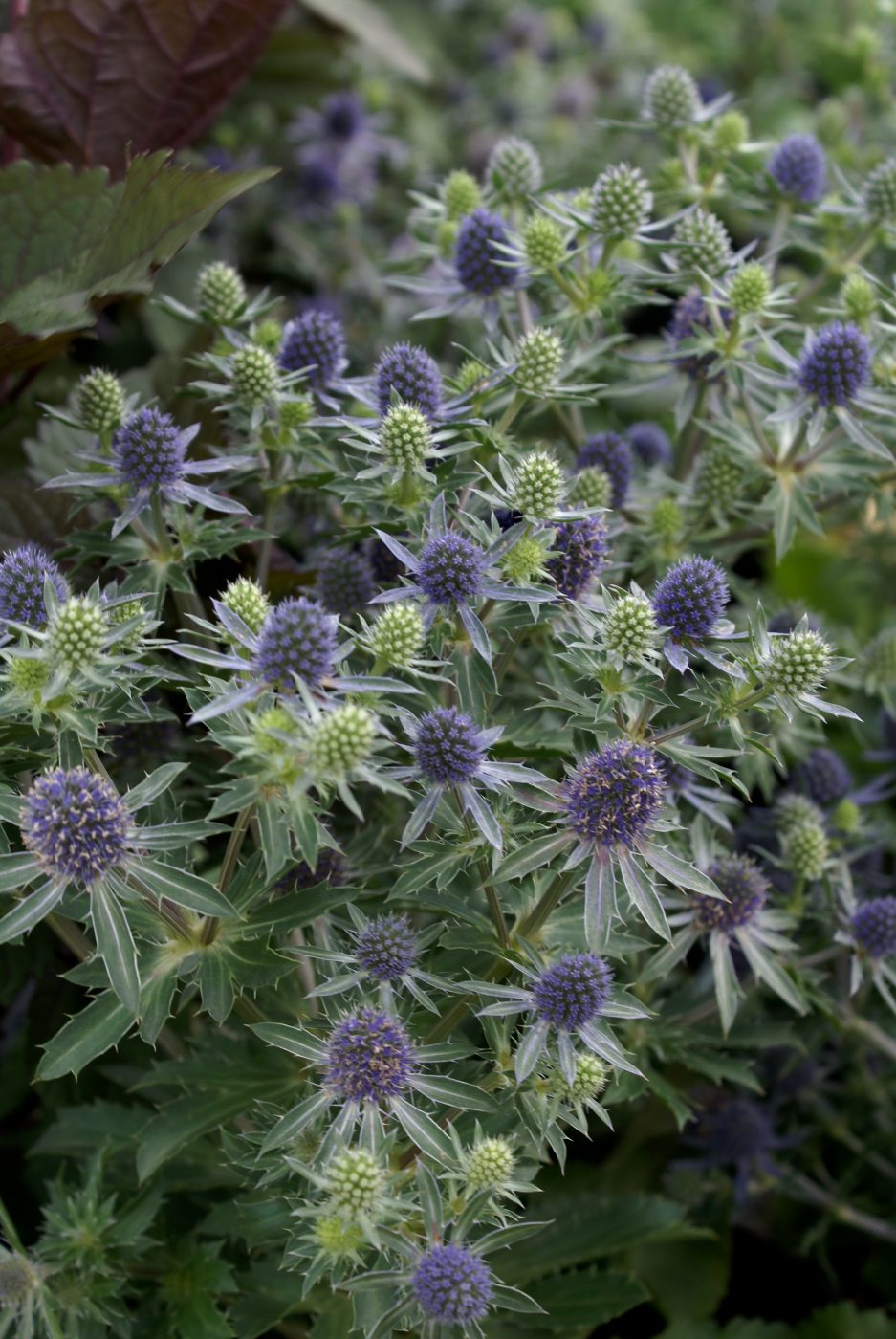
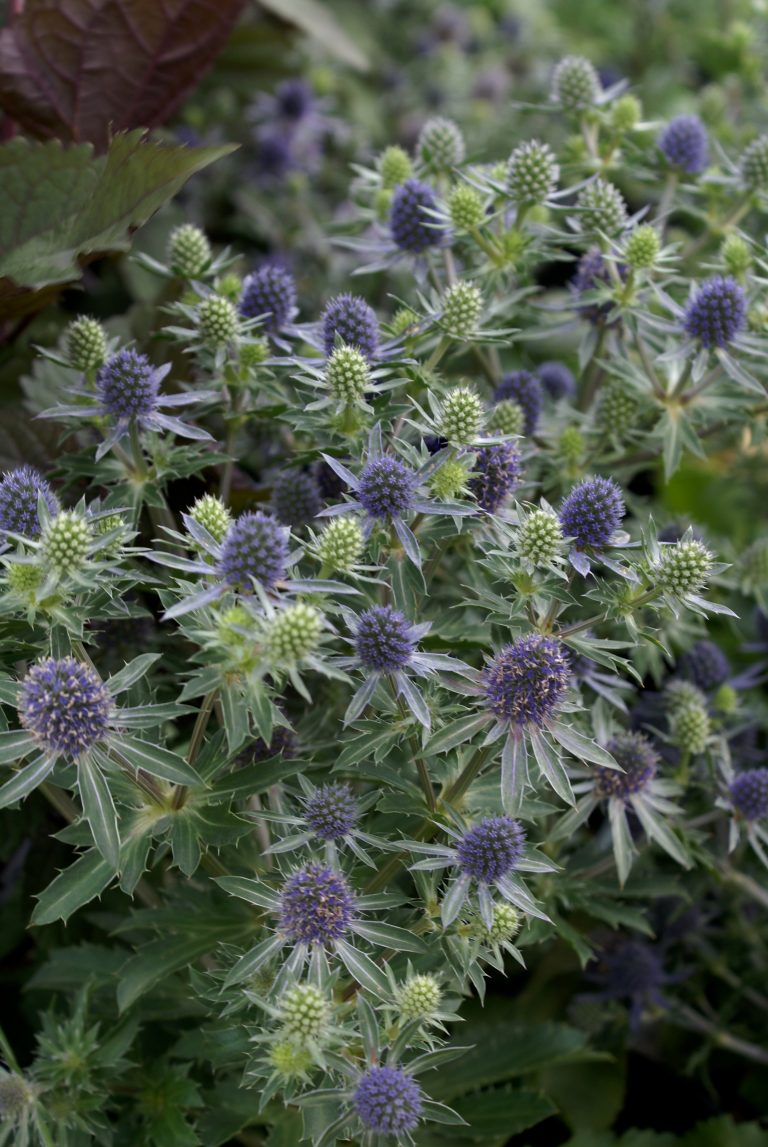
Sea hollies have dense flower heads surrounded by pointed bracts, often in steel-blue tones. They are useful fresh or dried. E. yuccifolium has strap-shaped leaves and greenish-white heads, while other species differ markedly in foliage. Give them sun and species-appropriate drainage and moisture.
CHARACTERISTICS & ATTRIBUTES
Growing Temperature: Moderate conditions with strong light. Cold requirements differ among sea-holly species and cultivars.
Soil pH: Many sea hollies accept neutral or mildly alkaline soil. Species and cultivars differ.
Pests and Diseases: Inspect sea-holly tips for aphids or thrips and basal leaves for damage. Check soft or declining roots before dividing fleshy-rooted species.
Potting and Timing: Use deep pots and avoid breaking the taproot. Check the species' cold requirement before committing to a first-year flowering date.
Moisture: Water sea-holly liners while roots establish. Later moisture depends on species: E. yuccifolium accepts moister soil than many dry-site sea hollies.
Planting Level: Set the crown at grade and keep basal foliage clear of wet media.
PGRs/Pinching: Do not routinely pinch the rosette or developing spikes. Leave seed heads for ornamental value if desired.