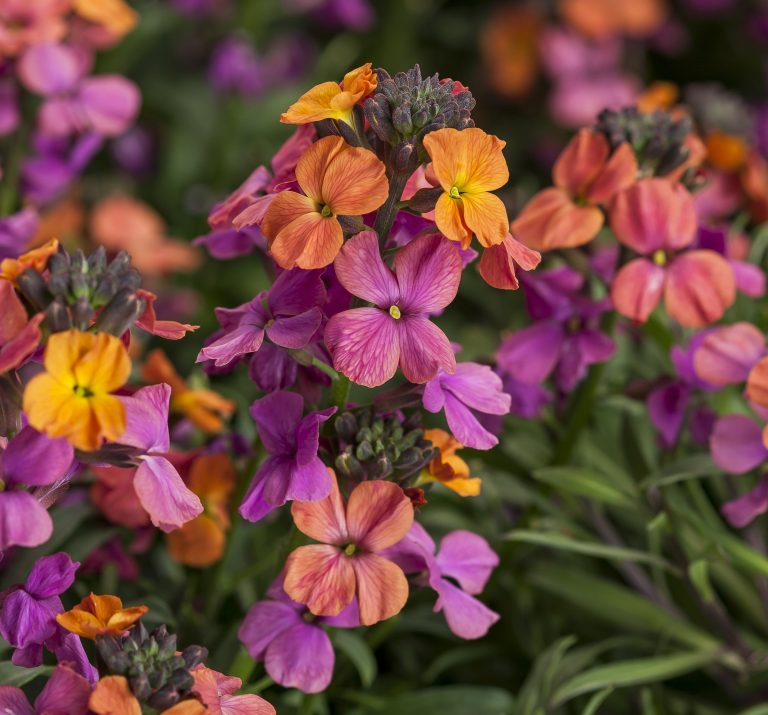
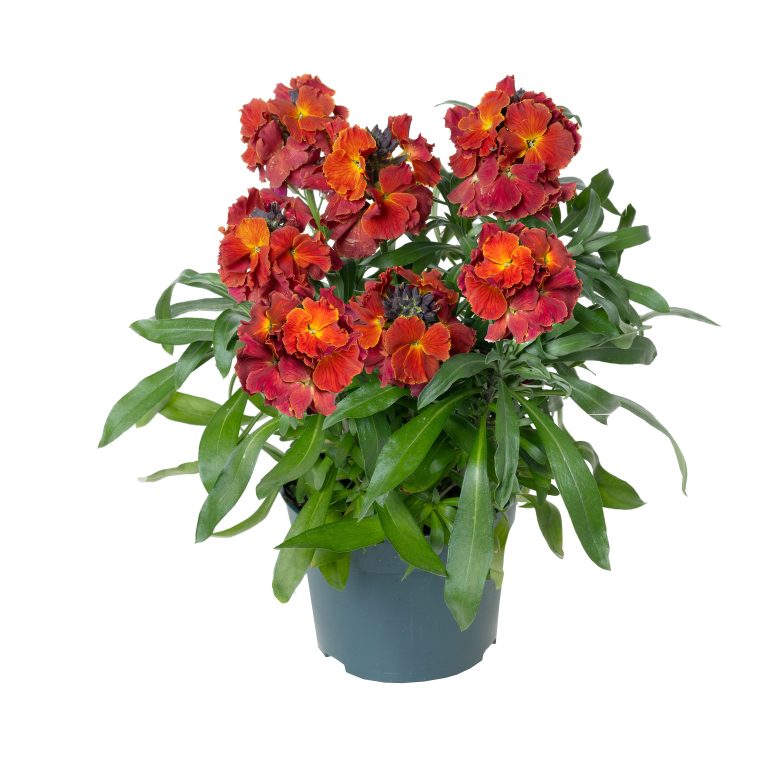
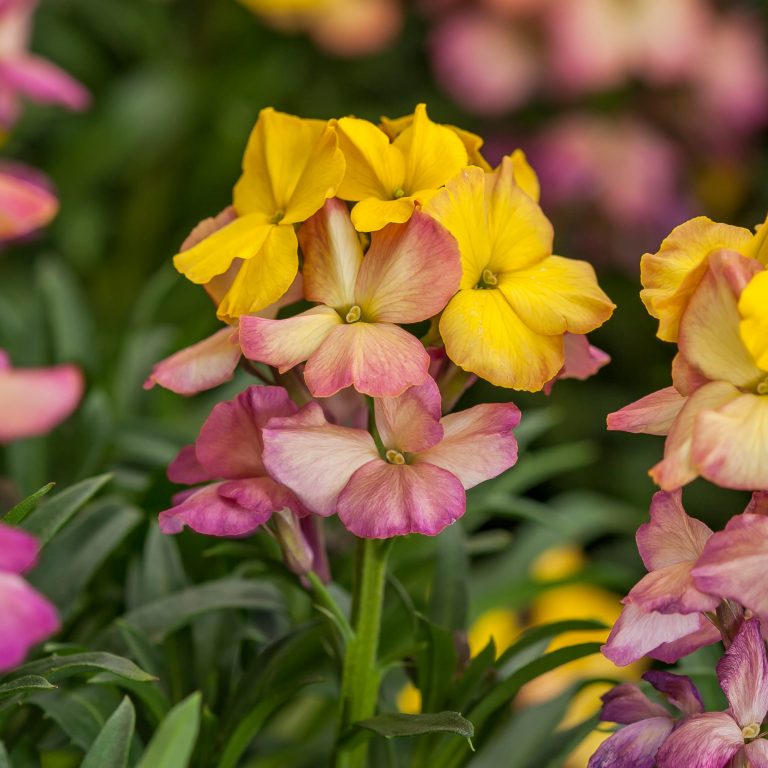
Wallflowers bring yellow, orange, purple or pink flowers to sunny beds and containers. Biennial types and shrubby perennial hybrids differ in season and hardiness. Grow in well-drained soil. Many perennial selections flower for a long period but are short-lived.
CHARACTERISTICS & ATTRIBUTES
Growing Temperature: Cool to moderate conditions suit spring wallflowers. Tender perennial hybrids require frost protection.
Soil pH: Neutral to mildly alkaline soil suits many wallflowers. Drainage is particularly important for perennial hybrids.
Pests and Diseases: Check wallflower shoots for aphids, thrips or mites. Inspect declining stems and roots, especially where perennial hybrids have overwintered in wet pots.
Potting and Timing: Distinguish cold-requiring biennial wallflowers from vegetative perennial hybrids. Avoid warm, wet overwintering of newly potted liners.
Moisture: Keep wallflowers moderately moist while rooting and flowering. Allow surface drying and reduce water during cool holding of shrubby hybrids.
Planting Level: Set the crown at grade and keep basal foliage clear of wet media.
PGRs/Pinching: An early pinch can branch shrubby hybrids. Trim lightly after bloom without cutting into bare woody bases.
Lighting: Full sun; protect cool-season crops from excessive heat.