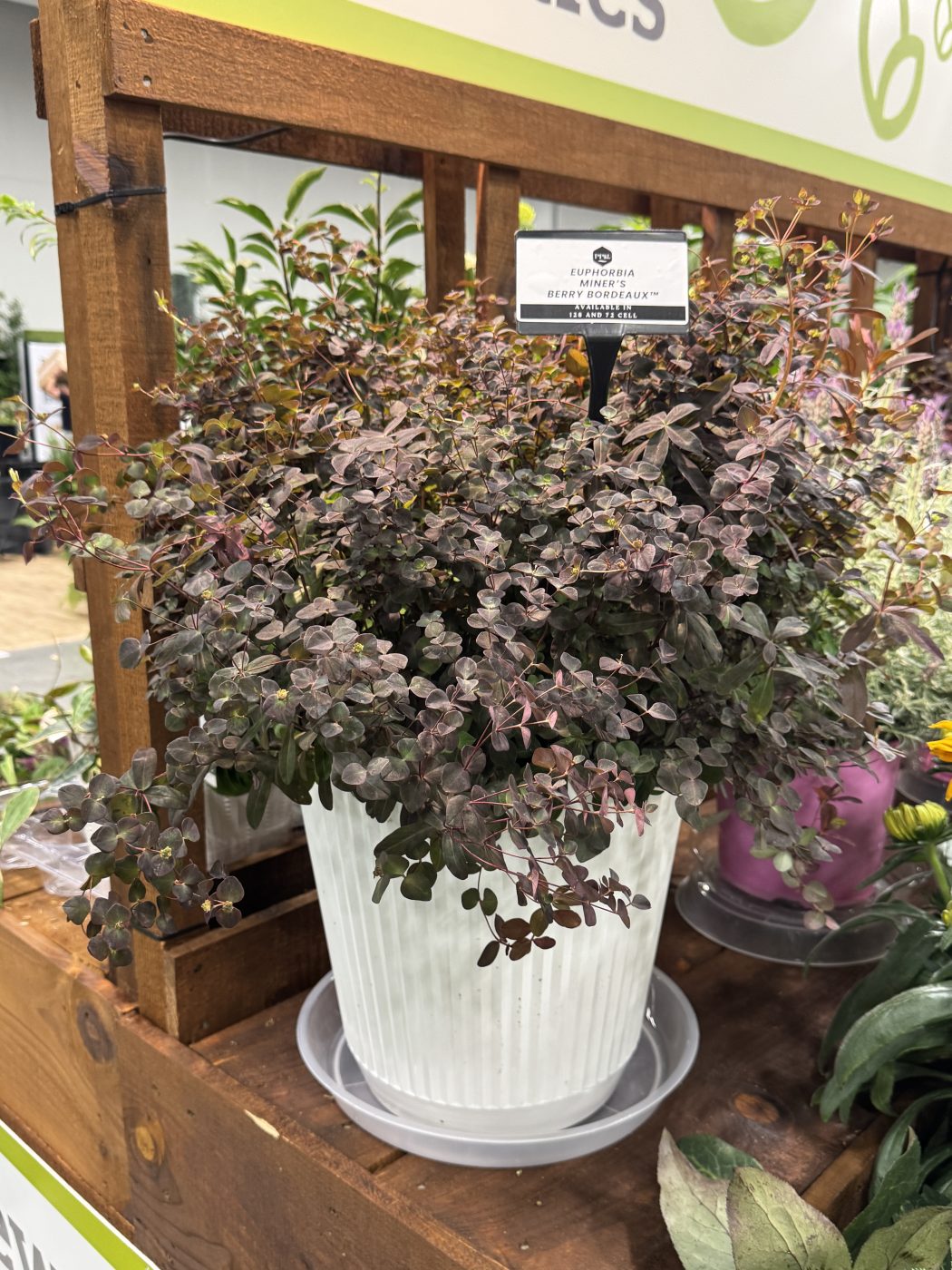
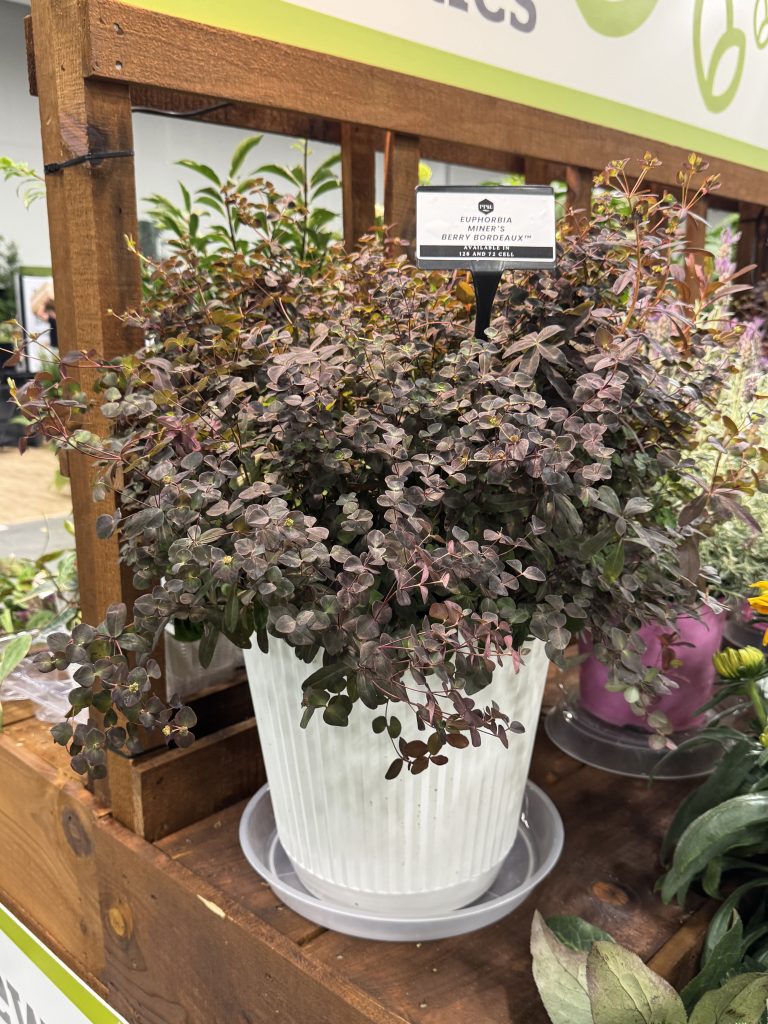
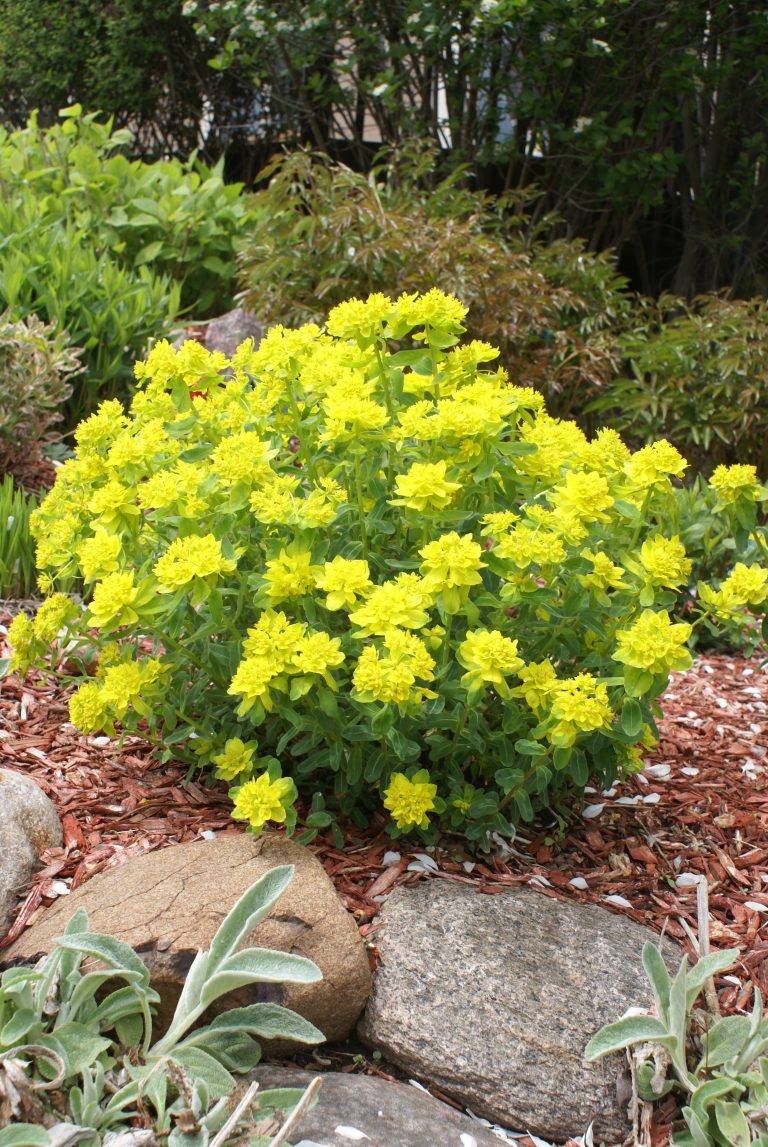
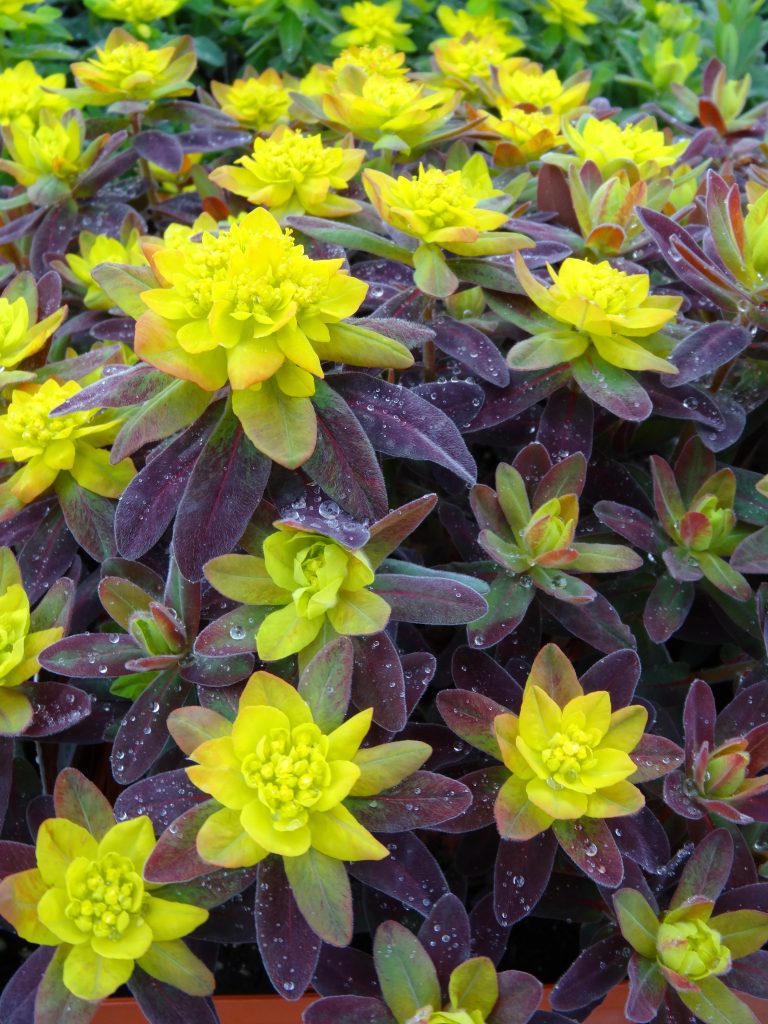
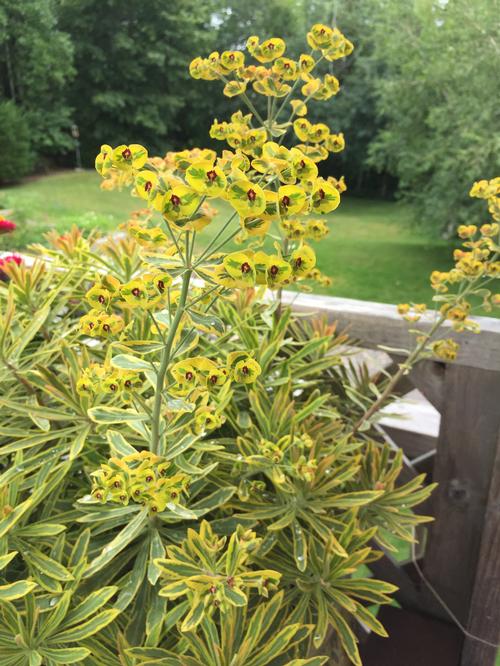
Spurges offer architectural foliage and conspicuous colored bracts around small flowers. The listed species range from herbaceous border plants to evergreen or succulent forms, with different winter needs. Their milky sap can irritate skin and eyes, so avoid contact when pruning.
CHARACTERISTICS & ATTRIBUTES
Growing Temperature: Hardy herbaceous spurges follow seasonal dormancy. Evergreen Mediterranean species need milder winter handling.
Soil pH: Species-dependent; hardy herbaceous and Mediterranean evergreen spurges do not share one narrow pH requirement.
Pests and Diseases: Check spurge tips for aphids and flowers for thrips. Remove damaged or decaying propagation material and keep the water regime matched to the species.
Potting and Timing: Separate hardy cushion spurges from evergreen Mediterranean types in the overwintering plan. Keep the caustic sap off skin and eyes when handling.
Moisture: Match water to the spurge species. Many dry-site evergreen spurges need distinct drying, while moisture-loving herbaceous species should not be kept dry.
Planting Level: Plant at the original liner depth with the crown even with the media surface.
PGRs/Pinching: Cut spent flowering shoots according to species; retain new basal shoots on biennial-stemmed forms. Wear gloves.
Lighting: Sun for most listed species; E. amygdaloides tolerates woodland shade.