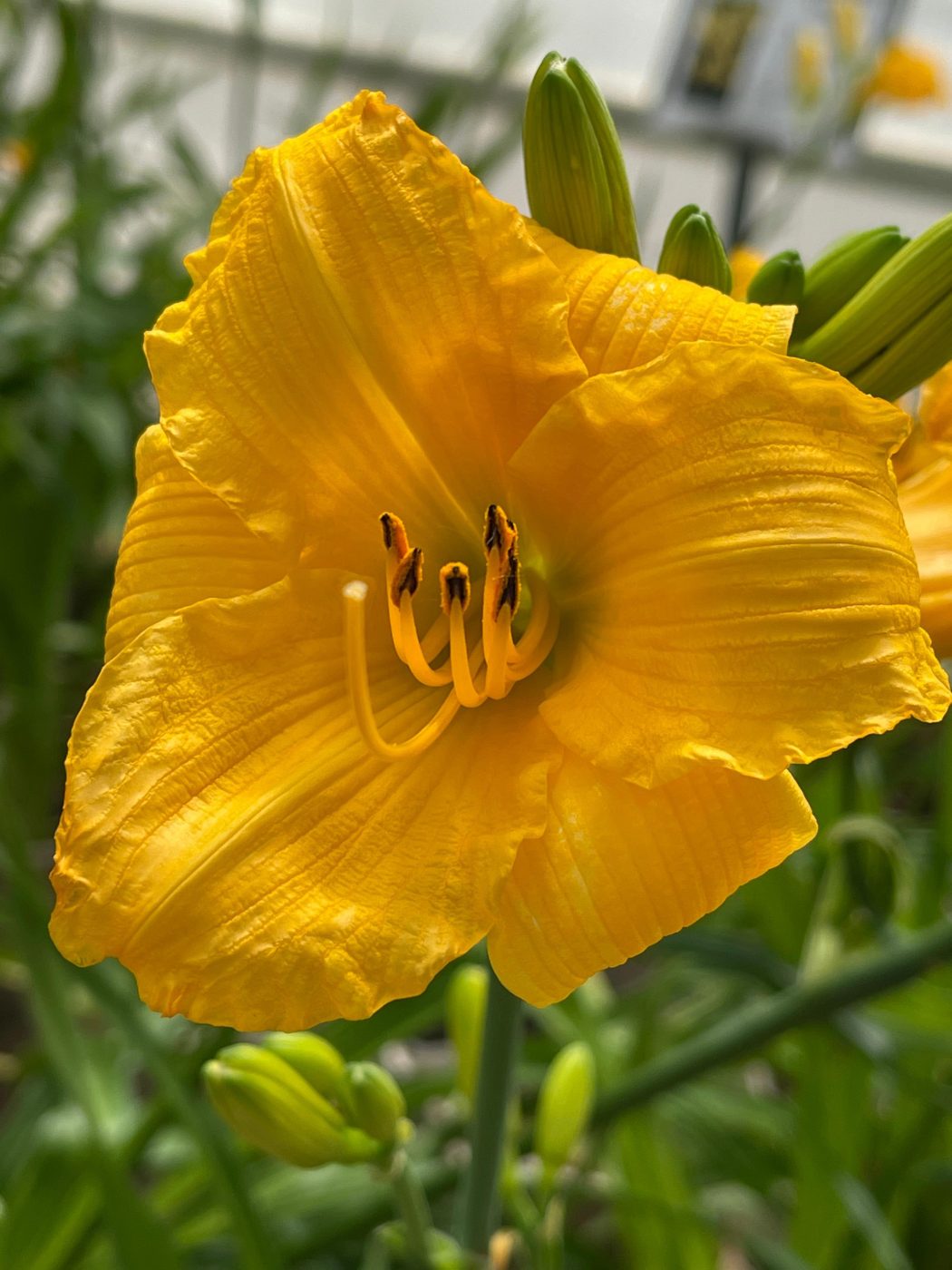
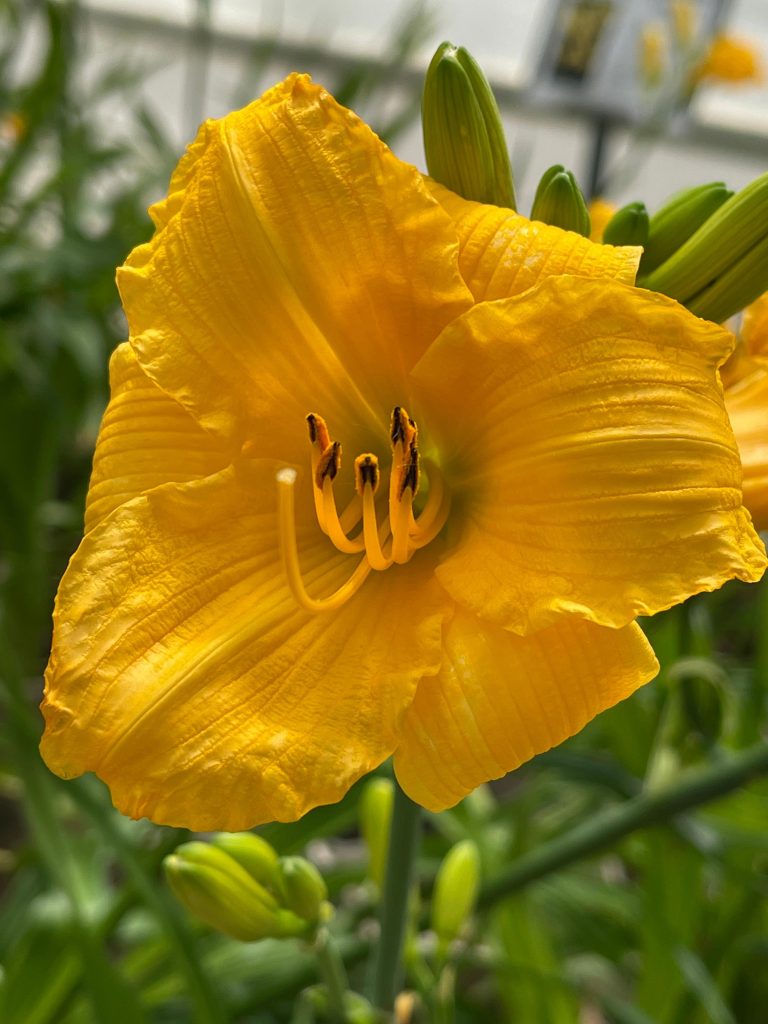
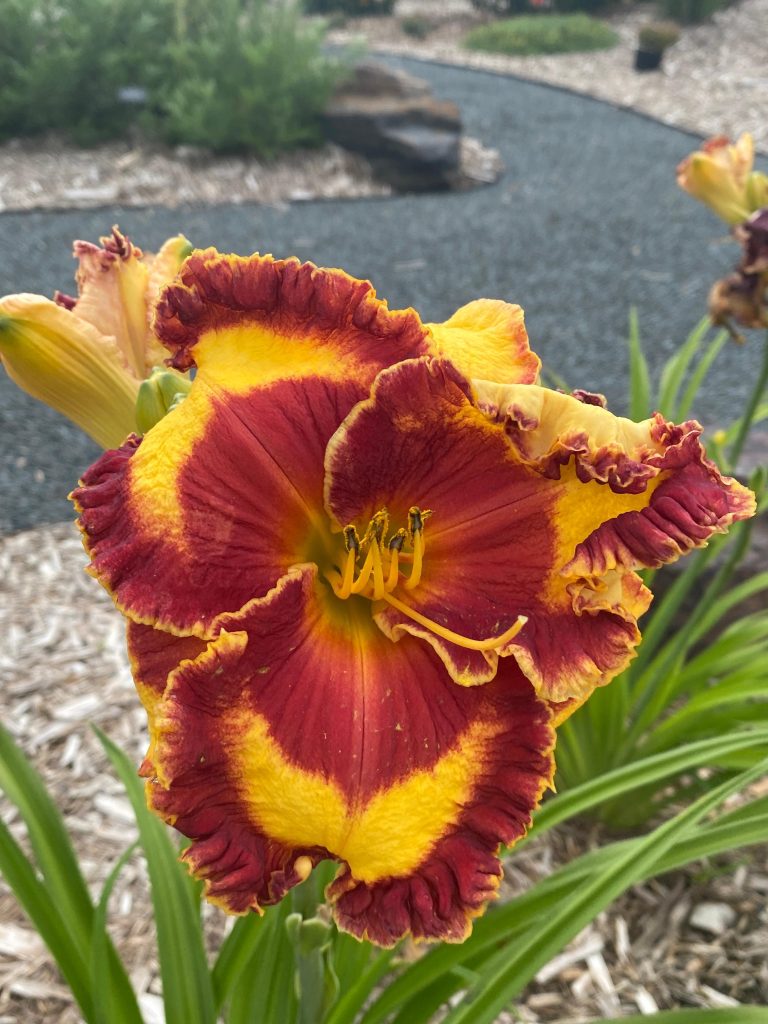
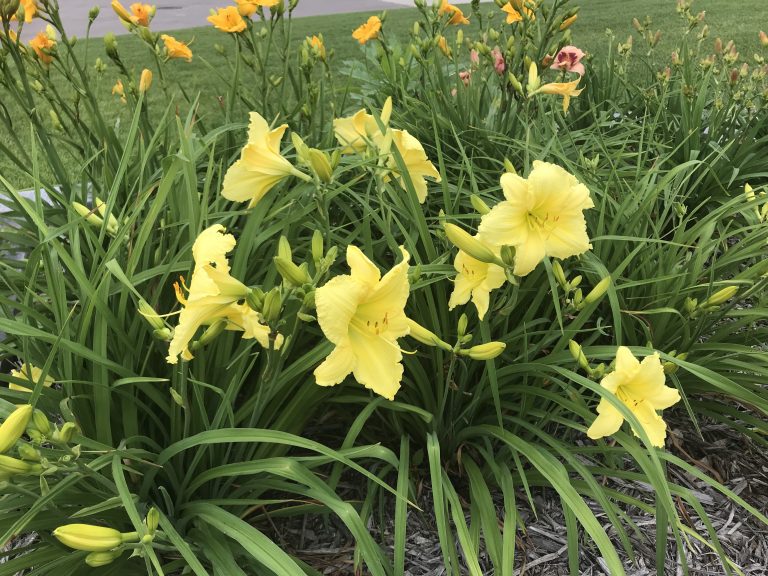
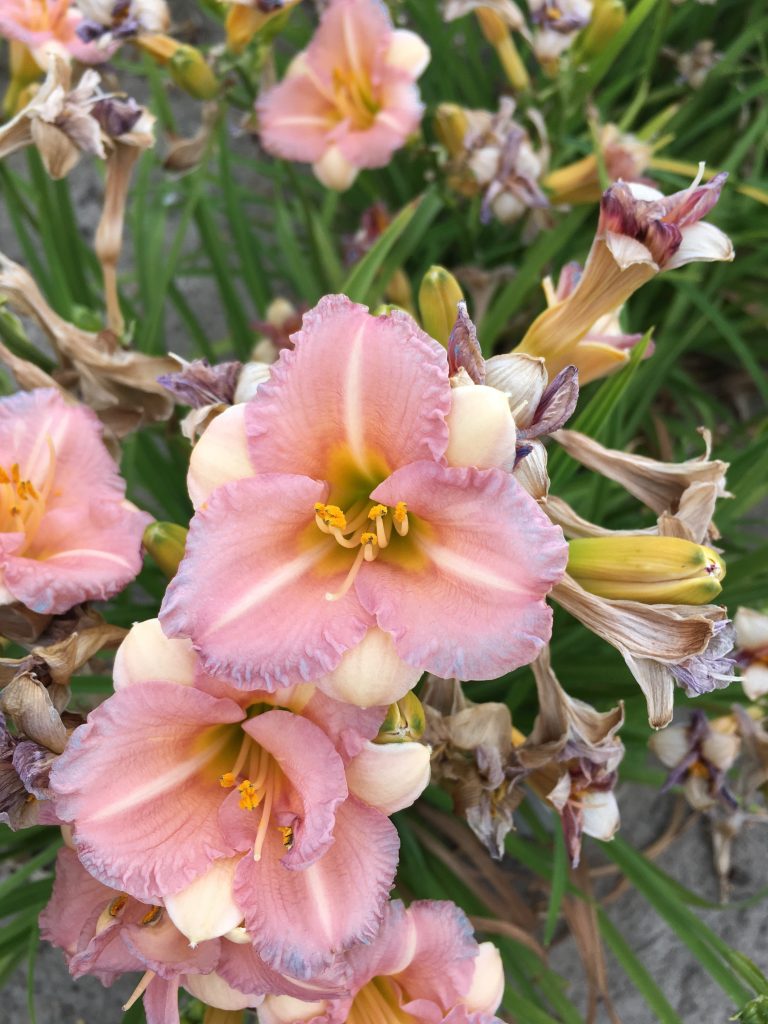
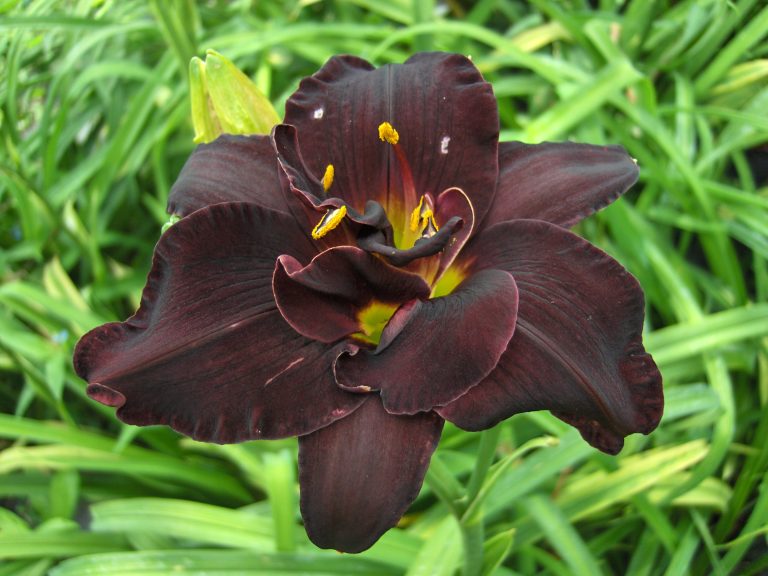
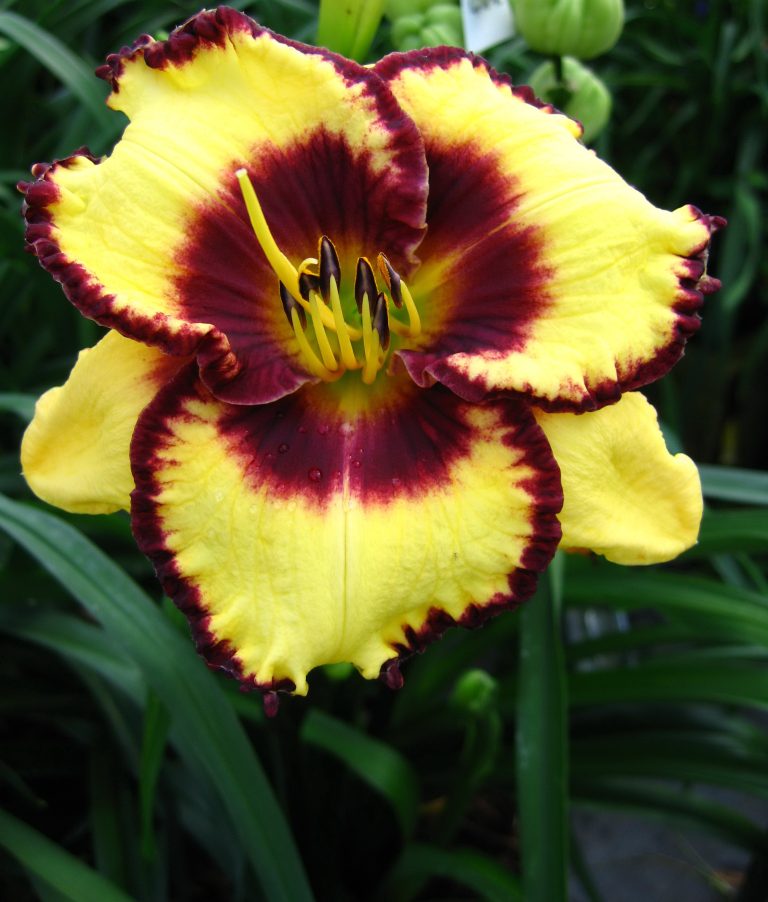
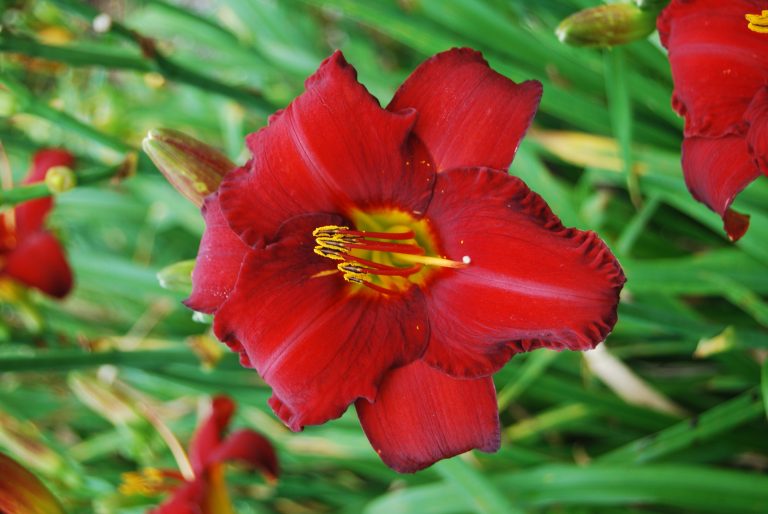
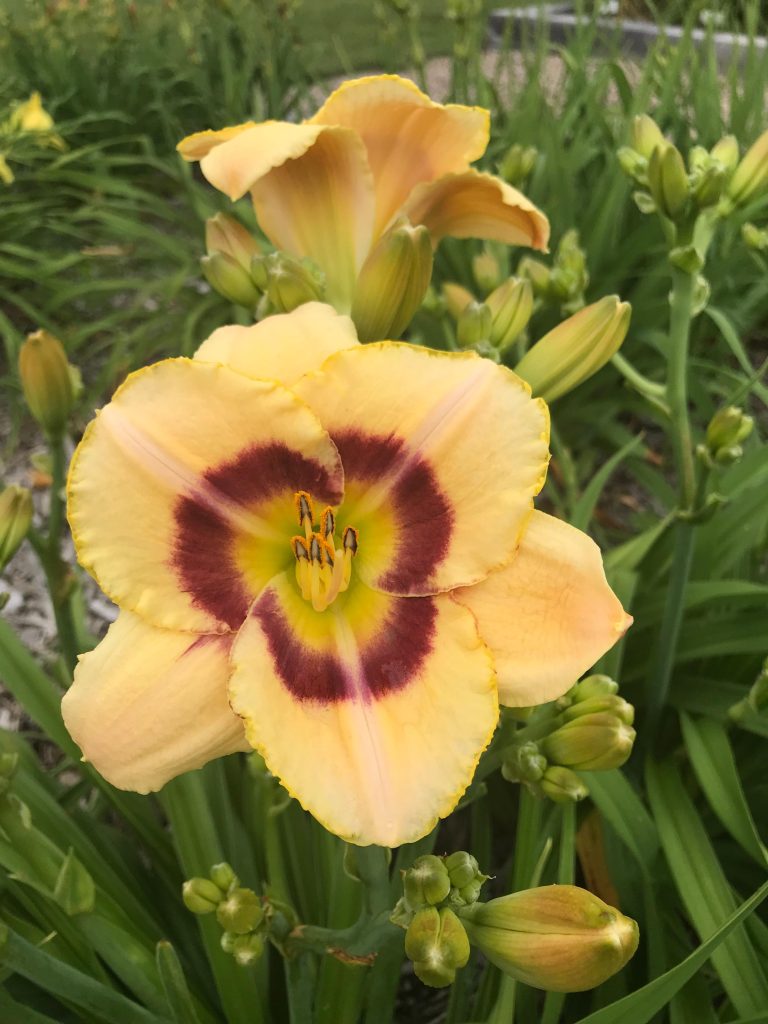
Daylilies form long-lived clumps of arching leaves with flowers carried on separate stalks. Each flower lasts about a day, but a well-budded plant opens new blooms over several weeks. Height, season, repeat flowering and dormant or evergreen foliage depend on the cultivar; foliage habit alone does not establish hardiness.
CHARACTERISTICS & ATTRIBUTES
Growing Temperature: Resume seasonal growth after the cultivar’s rest period. Flowering depends on crown size and bloom season as well as temperature.
Soil pH: 6.2–6.7 in the daylily container guide.
Pests and Diseases: Daylily rust is important in warmer regions. Watch for thrips, aphids, mites and leaf streak, and inspect crowns that remain soft after overwintering.
Potting and Timing: Spread fleshy roots and set the crown about 1 in below the surface. Bloom timing depends on cultivar season, crown size and prior dormancy.
Moisture: Keep daylilies evenly moist while roots, leaves and flowers develop. Established clumps tolerate some drying, but new bare-root divisions need regular checks.
Planting Level: Plant roots so the crown is roughly 1 inch below media surface.
PGRs/Pinching: Do not pinch leaf fans or scapes. Remove spent stems and dead leaves without injuring the crown.
Lighting: Full sun for most cultivars; light afternoon shade can preserve dark flower colors.