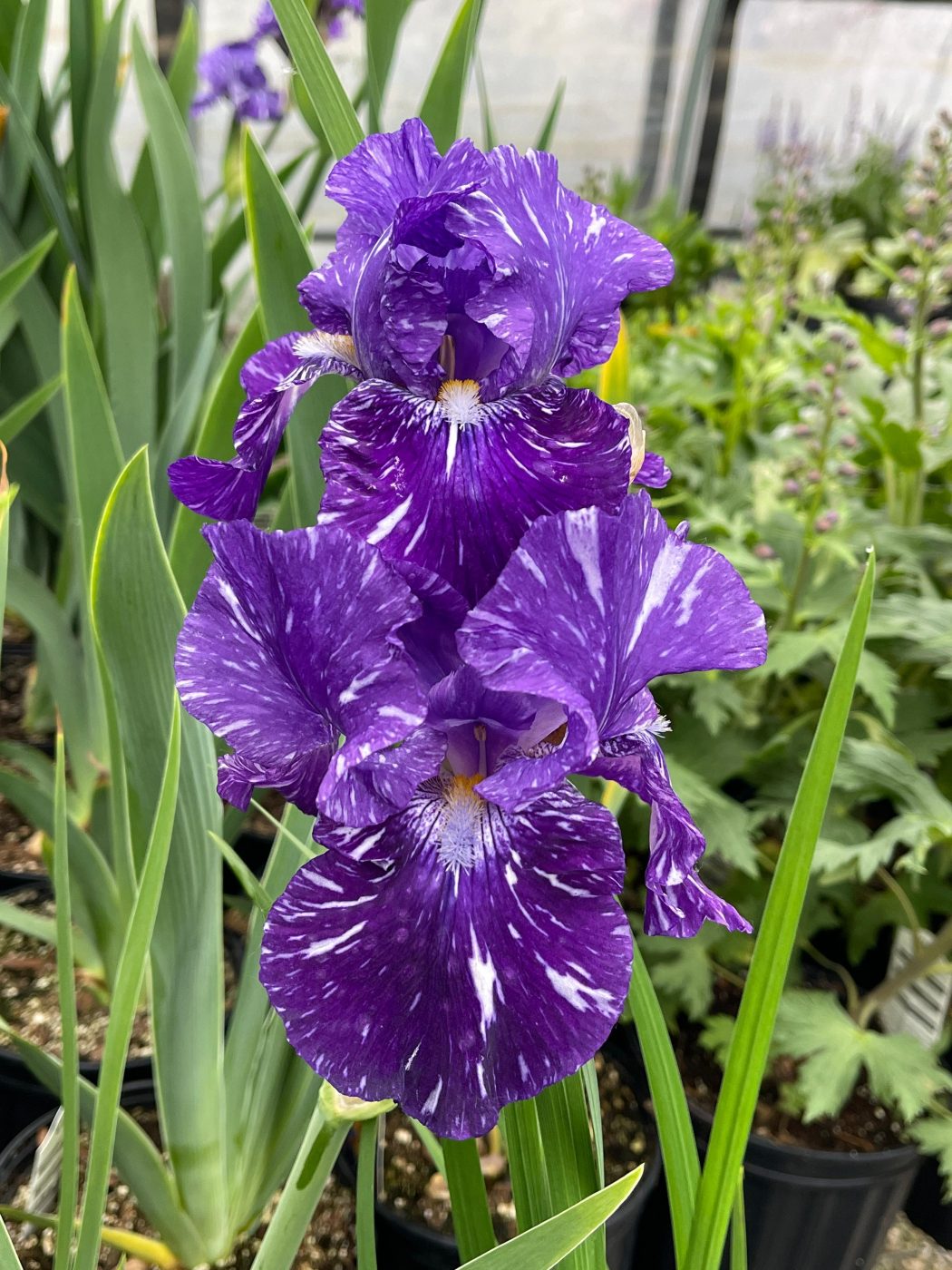
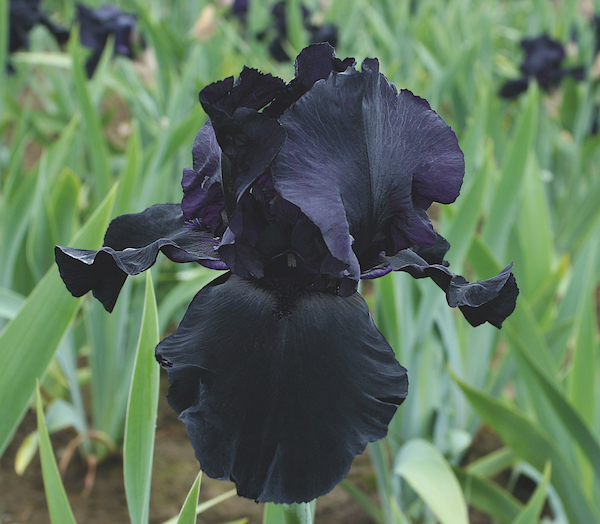
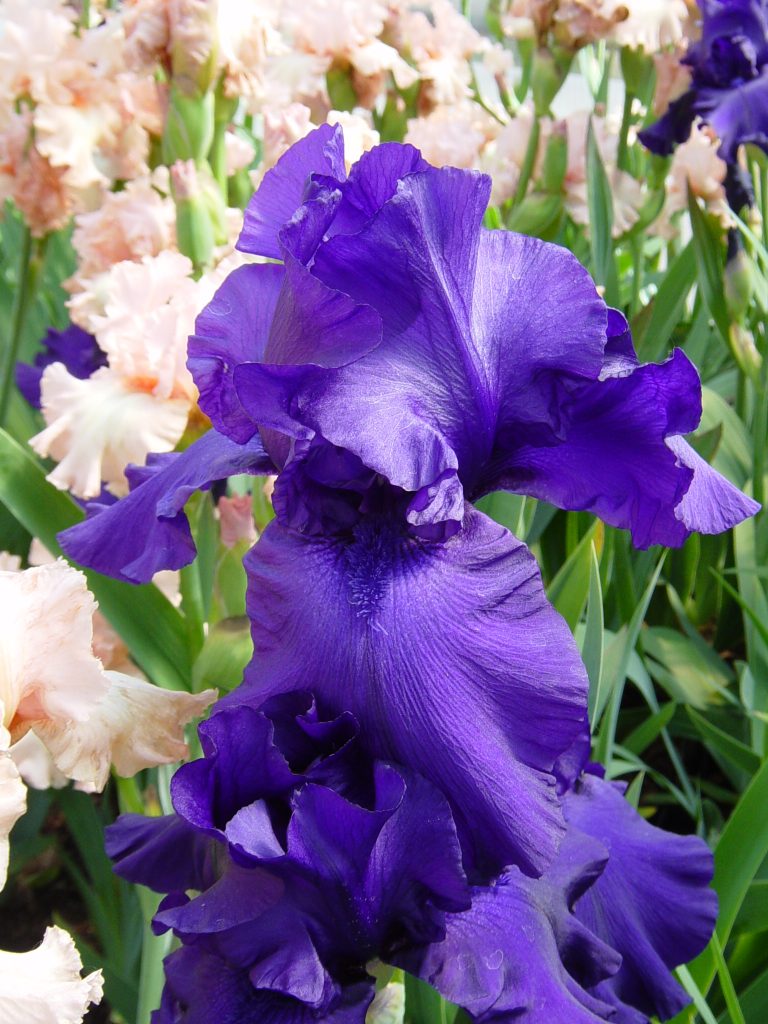
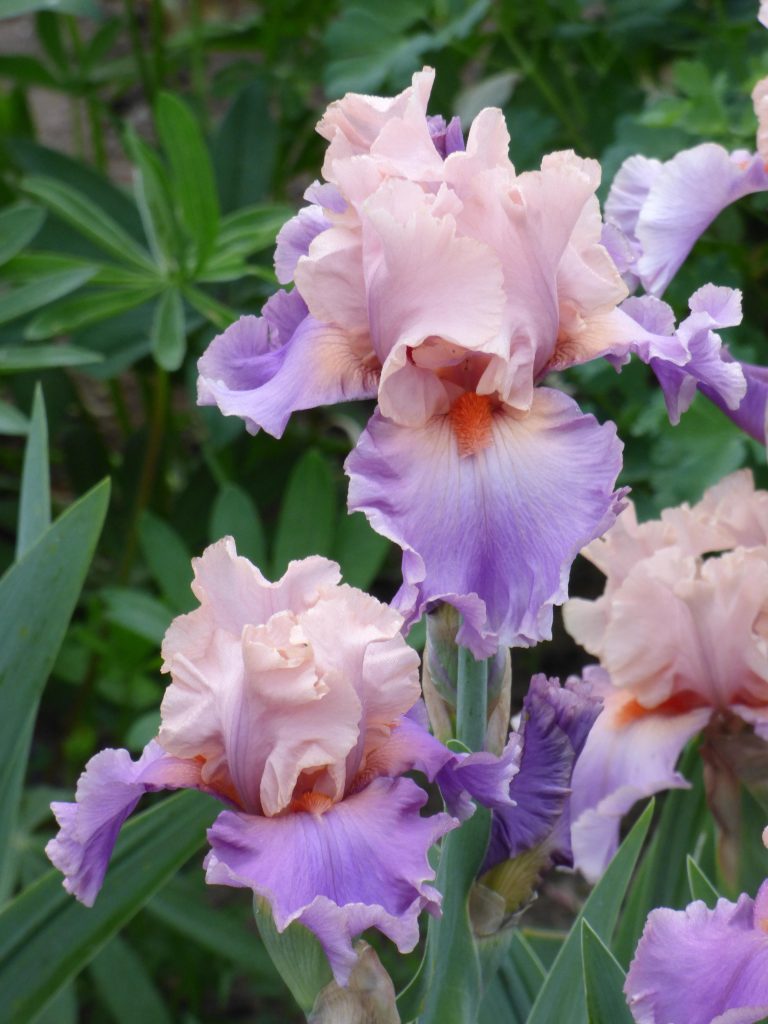
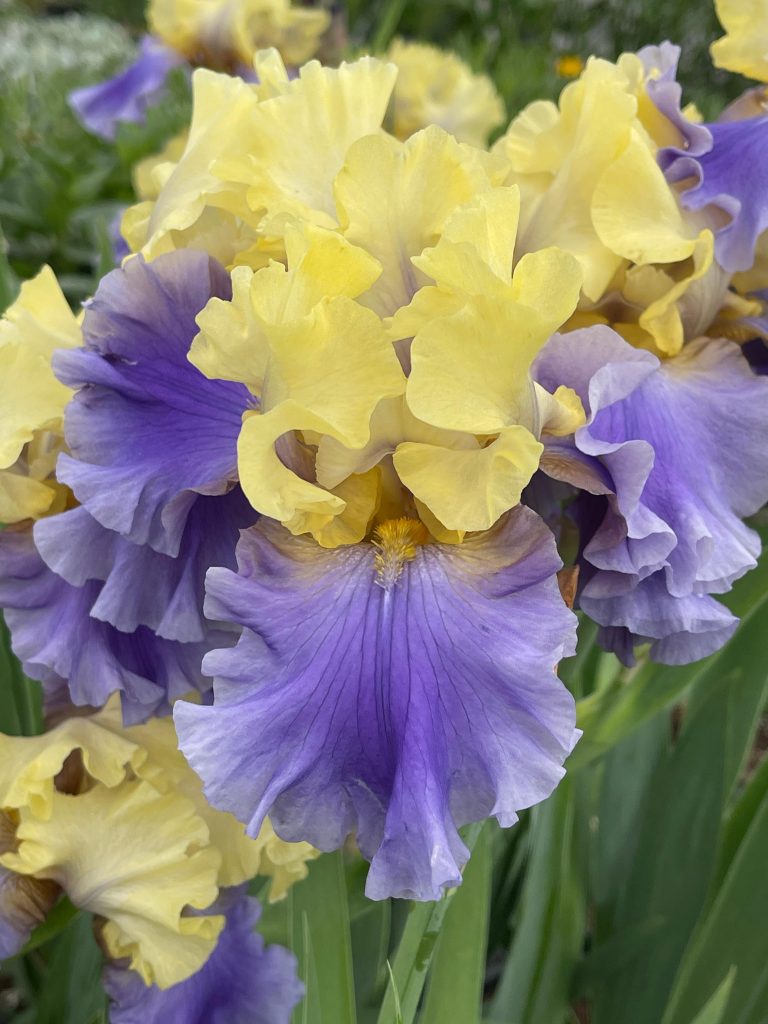
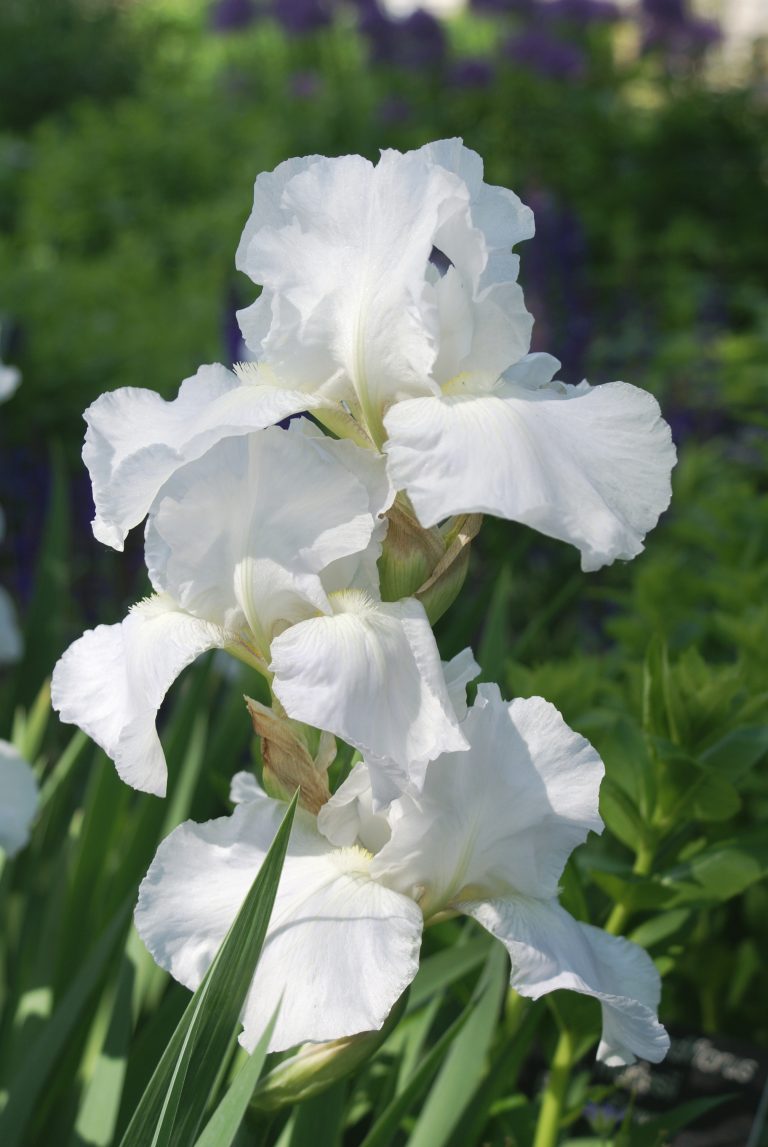
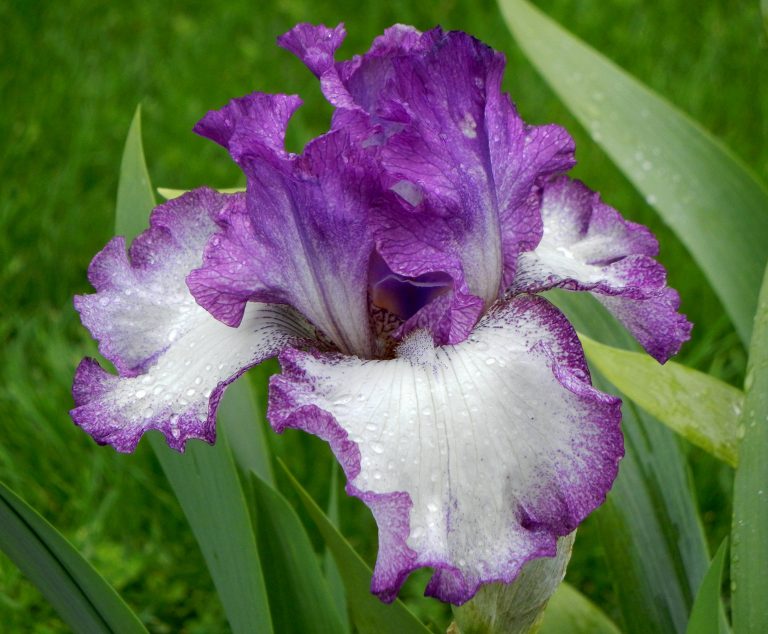
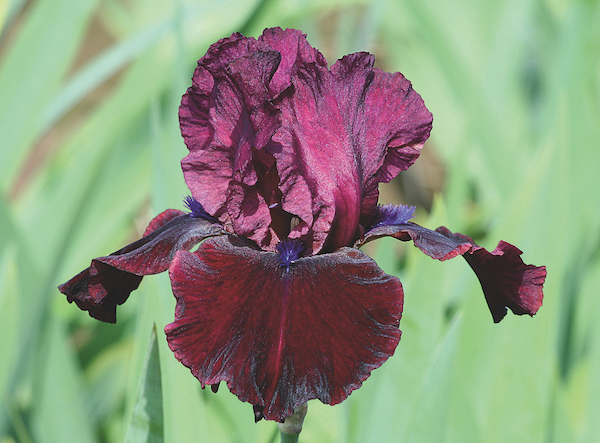
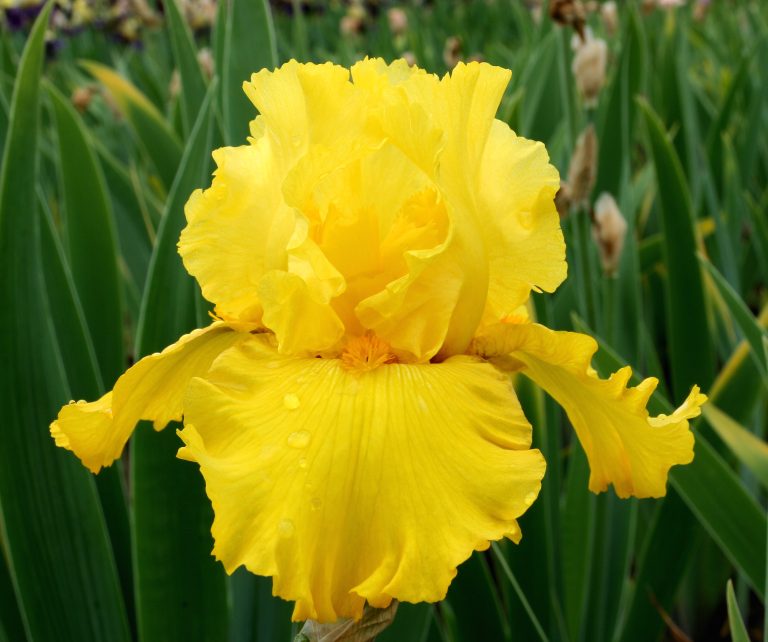
Bearded irises carry ruffled flowers with a fuzzy beard on the falls above fans of sword-shaped leaves. Tall selections bloom mainly in late spring, with repeat flowering in some cultivars. Full sun, an exposed upper rhizome and good drainage support healthy growth and flowering.
CHARACTERISTICS & ATTRIBUTES
Growing Temperature: Cool spring growth from mature rhizomes. Use the cultivar’s cold history for a flowering schedule.
Soil pH: Neutral to mildly alkaline garden soil is suitable for bearded iris; keep rhizomes well drained.
Pests and Diseases: Scout for iris borers where present, leaf spots and bacterial soft rot. Remove soft, damaged rhizomes and keep the upper rhizome exposed with good air movement.
Potting and Timing: Use sound rhizomes or rooted plugs and keep the upper rhizome exposed. A flowering spring crop requires mature, appropriately cooled stock.
Moisture: Water bearded-iris divisions while new roots develop, then allow moderate drying. Keep the upper rhizome out of persistently wet media.
Planting Level: Keep the upper half of the rhizome at or slightly above the media surface; buried rhizomes rot readily.
PGRs/Pinching: Do not pinch leaf fans. Remove old flower stems and damaged leaves without cutting into rhizomes.
Lighting: Full sun; substantial shade reduces flowering and increases weak growth.