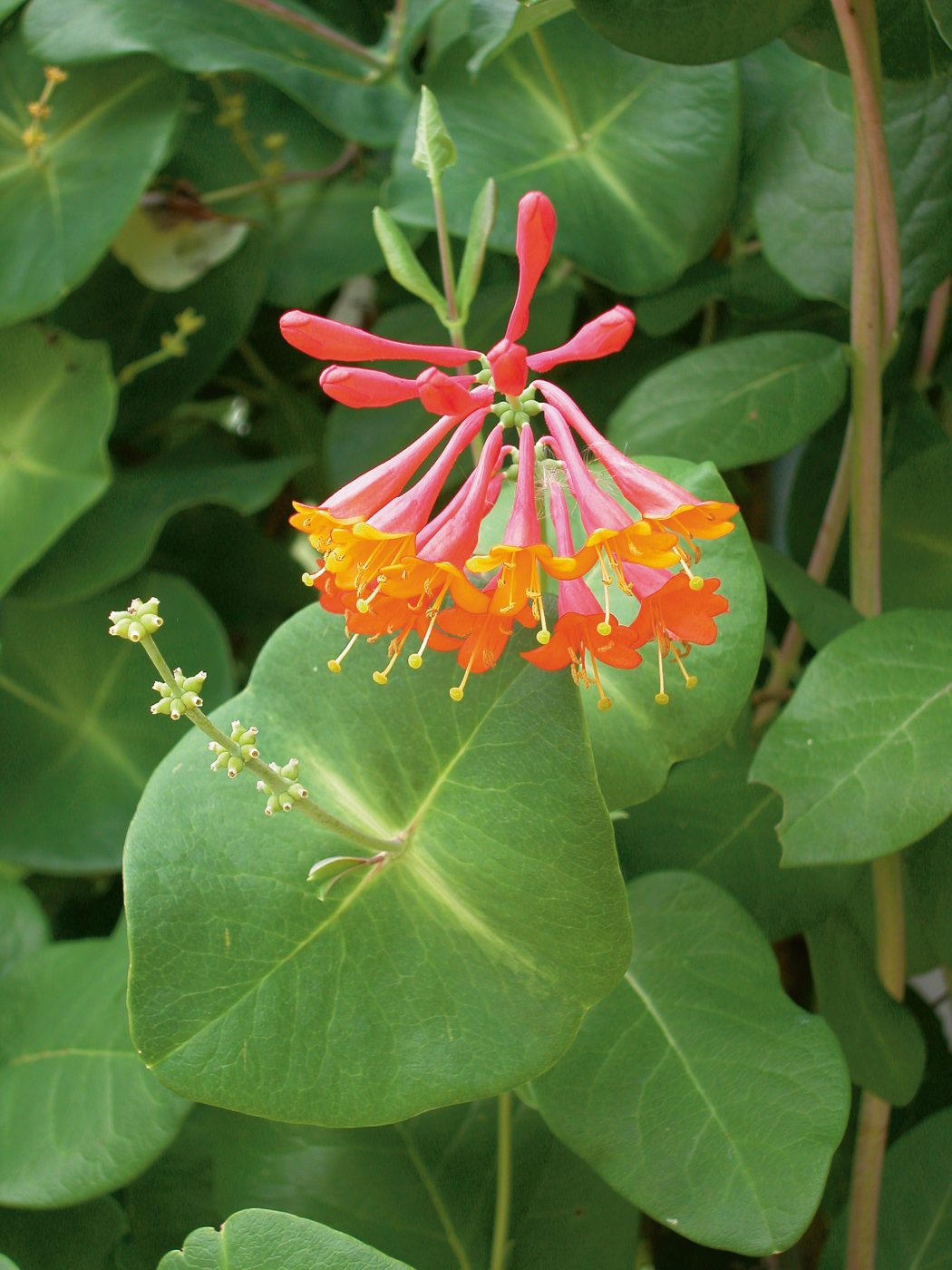
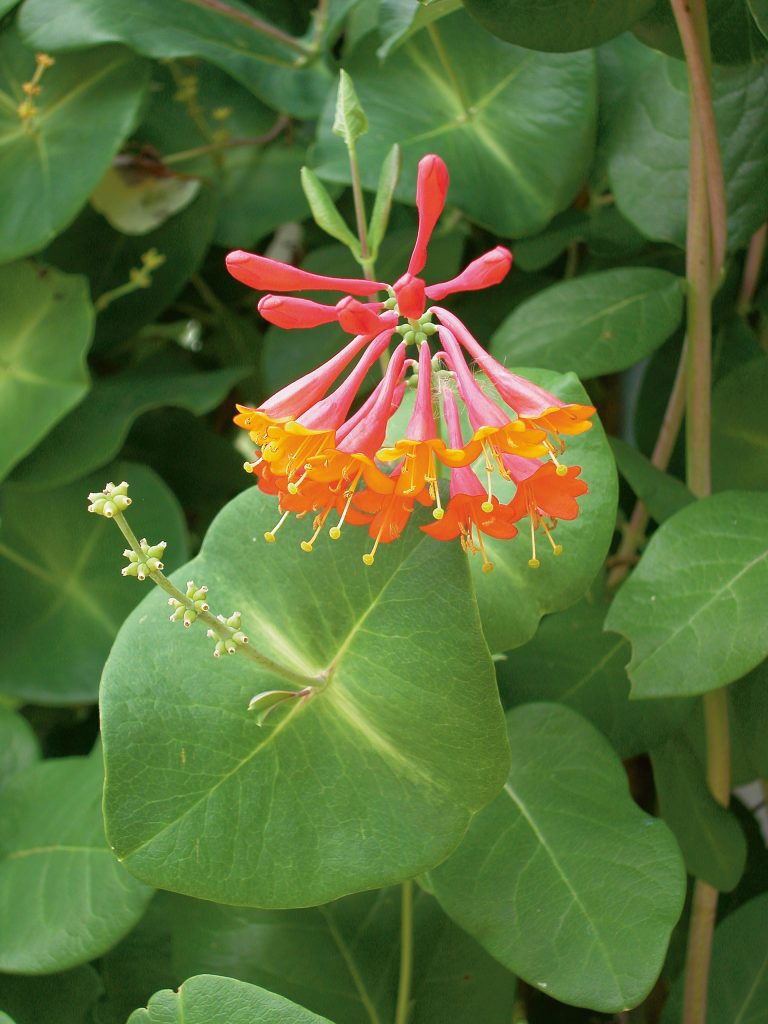
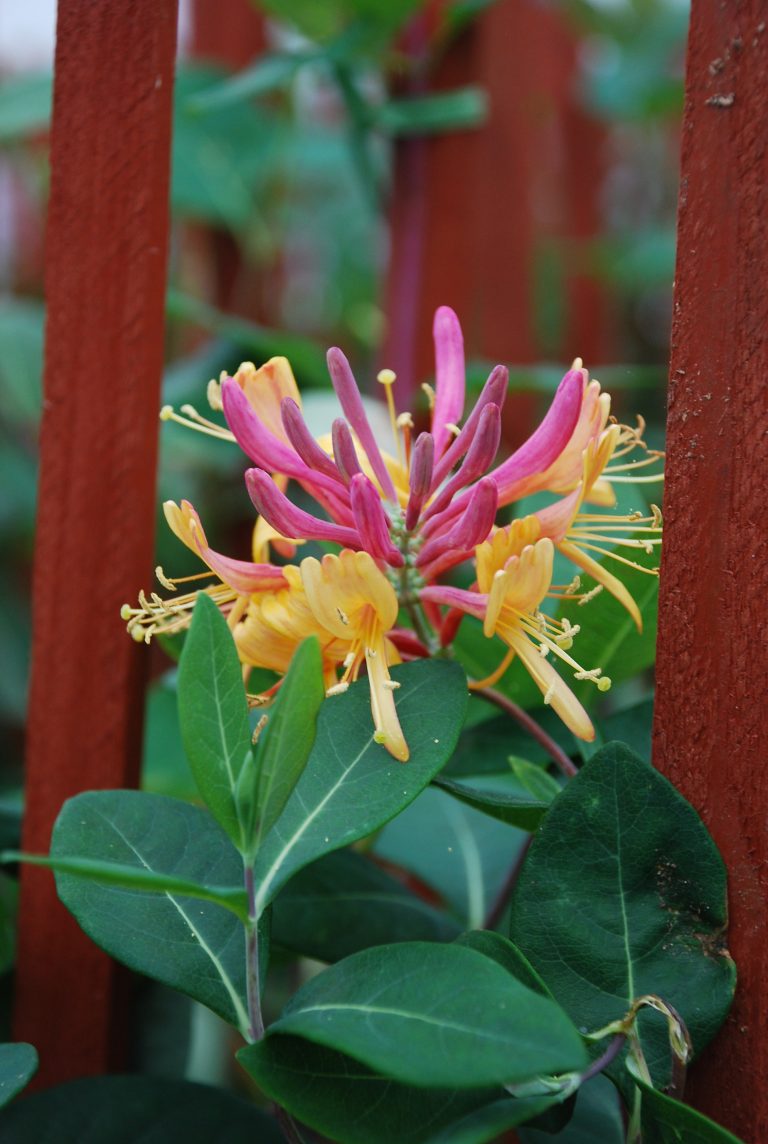
Climbing honeysuckles produce clusters of tubular flowers on twining stems. Lonicera sempervirens is especially useful for hummingbirds; the strong fragrance associated with some other honeysuckles is not universal. Provide a support and prune according to the species and flowering habit.
CHARACTERISTICS & ATTRIBUTES
Growing Temperature: Resume seasonal growth after winter rest. Frost protection for soft new shoots differs from the mature vine’s hardiness.
Soil pH: Species-dependent. Most garden honeysuckles tolerate acidic to neutral soil and some lime.
Pests and Diseases: Check honeysuckle growing tips for aphids and leaves for mites or mildew. Inspect damaged stems and keep the trained canopy accessible.
Potting and Timing: Install support at potting and verify the species. Native trumpet honeysuckle and invasive honeysuckle species must not be treated as interchangeable stock.
Moisture: Water honeysuckle liners and flowering vines regularly. Allow some surface drying without repeatedly wilting shoots on the support.
Planting Level: Plant at the liner depth and install the support without damaging the root ball.
PGRs/Pinching: Train main stems and shorten laterals after the main bloom where appropriate.
Lighting: Full sun to partial shade; more sun generally gives more flowers.