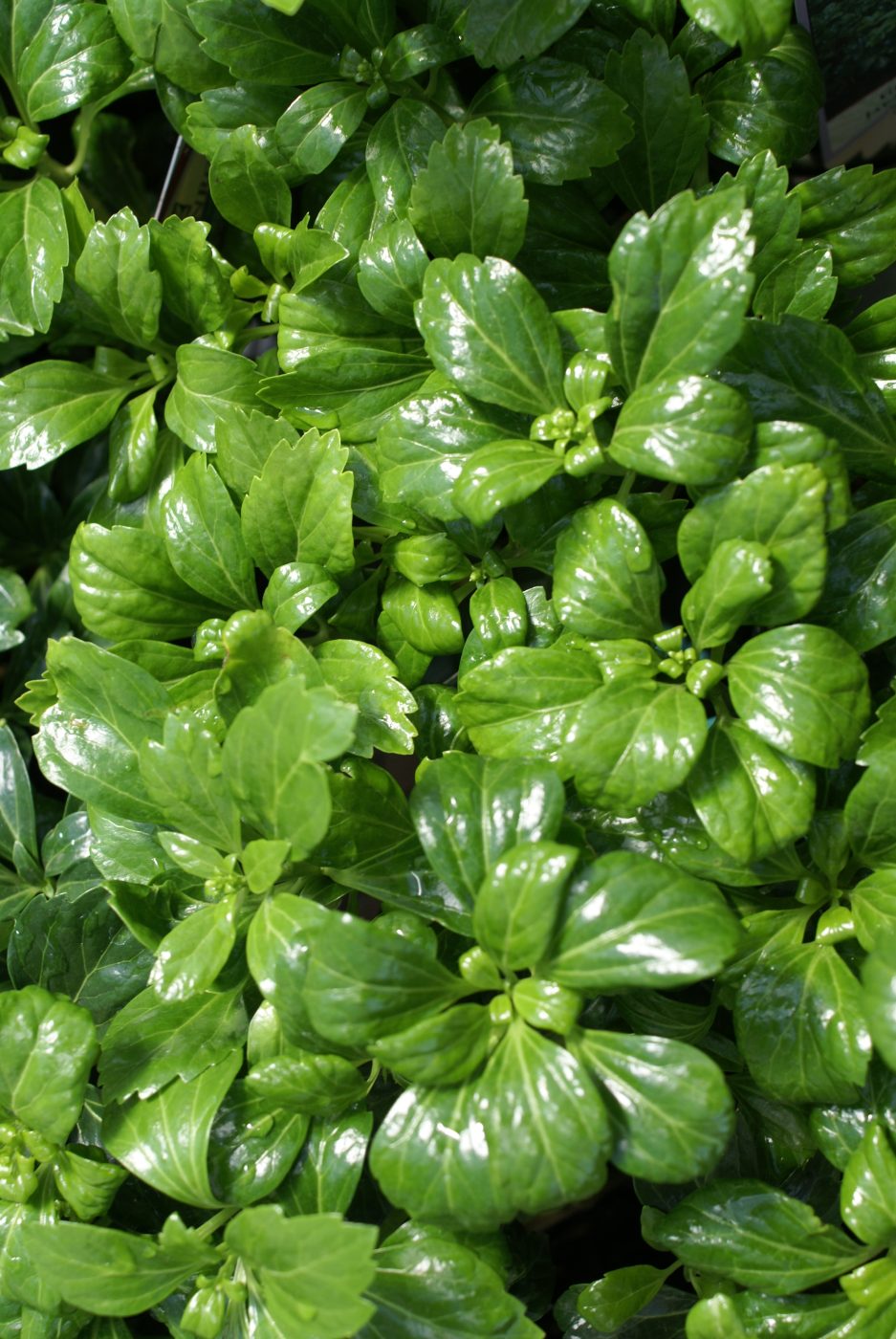
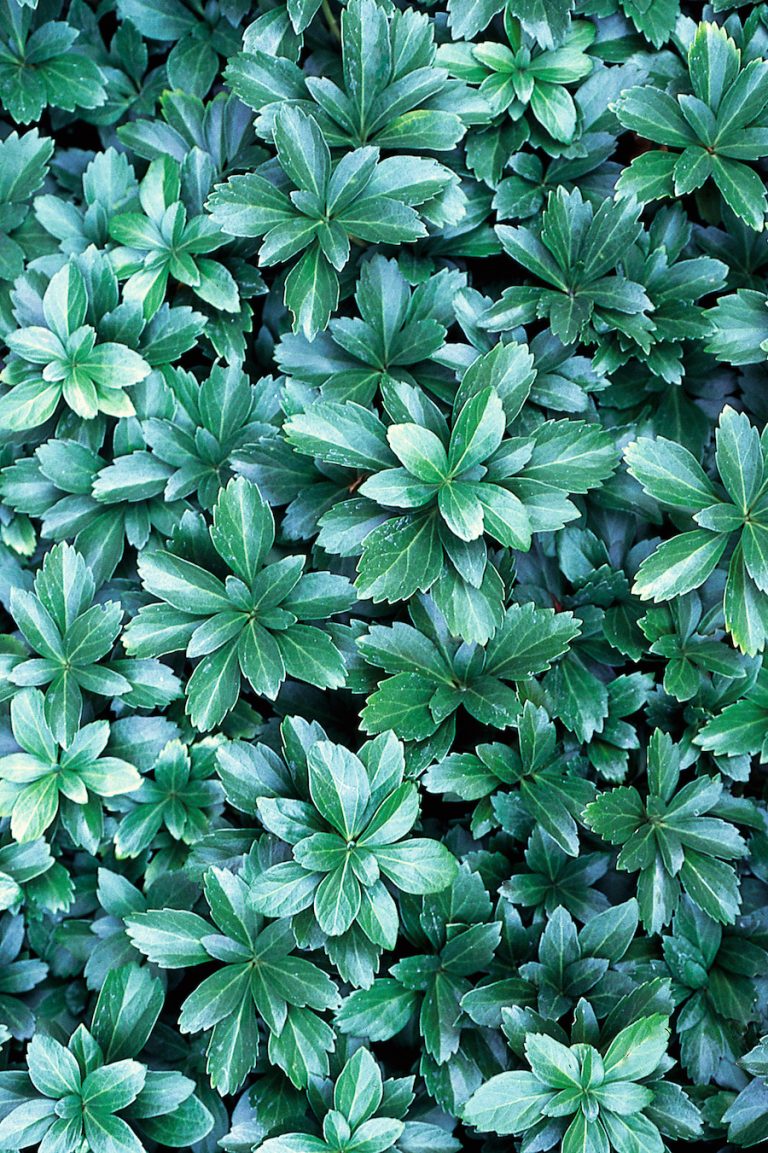
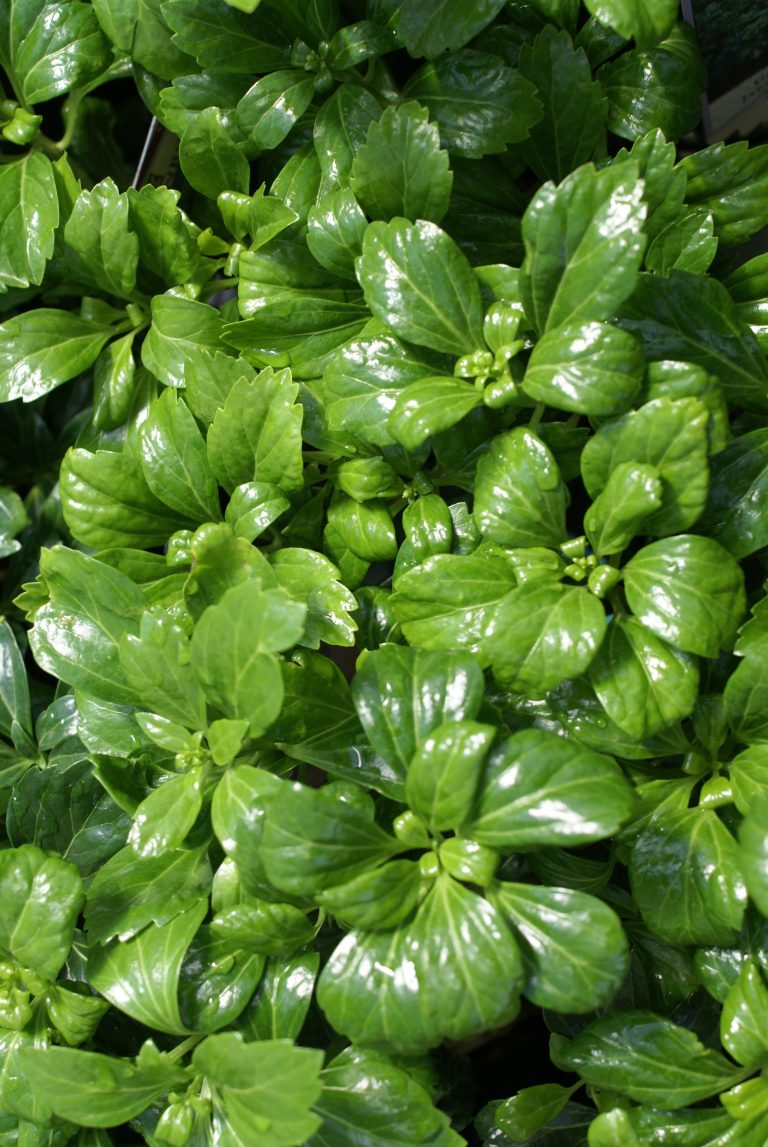
Pachysandra makes a spreading carpet beneath trees and shrubs. Japanese and Allegheny pachysandra differ in leaf character and winter appearance. Shade, organic soil and reliable drainage help maintain an even stand.
CHARACTERISTICS & ATTRIBUTES
Growing Temperature: Cool to moderate shaded production. Hot, crowded, wet foliage increases the risk of decline.
Soil pH: P. terminalis favors acidic to neutral soil. Check other Pachysandra species separately.
Pests and Diseases: Volutella blight can cause leaf lesions and stem dieback. Check for scale, including euonymus scale, and investigate root decline in poorly drained areas.
Potting and Timing: Use rooted plugs in a shaded, well-aerated production area. Keep dense evergreen foliage from remaining wet overnight.
Moisture: Keep pachysandra moderately moist while rhizomes establish. Allow slight surface drying and avoid stagnant media beneath a dense mat.
Planting Level: Plant plugs even with the surface so stems can spread across—not beneath—the media.
PGRs/Pinching: Trim young shoots only when branching is needed. Avoid cutting through a crowded, diseased mat and spreading contaminated debris.
Lighting: Partial to full shade; strong sun often yellows Japanese pachysandra.