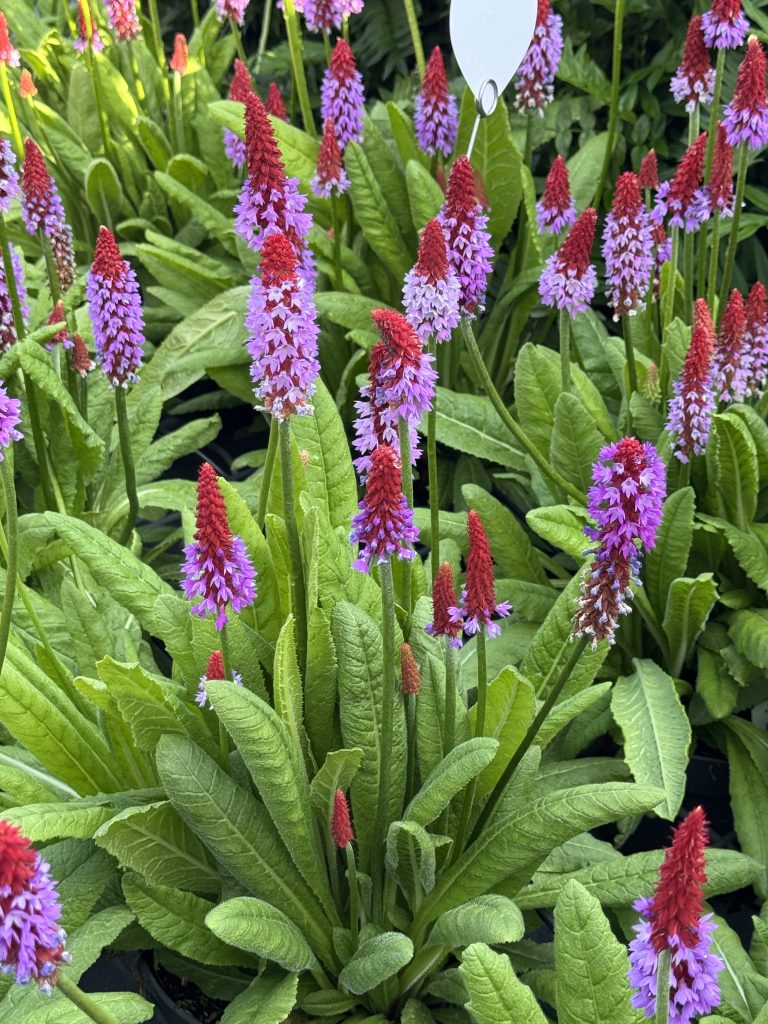
Primroses range from low spring-flowering rosettes to taller candelabra types that flower later. They are grown for colorful flowers above basal foliage. Cool roots and reliable moisture suit most. Match the species to the site rather than treating all as spring bedding plants.
CHARACTERISTICS & ATTRIBUTES
Growing Temperature: Cool finishing for common spring primroses. Candelabra species and other groups need separate seasonal schedules.
Soil pH: Varies by species. Some primroses tolerate lime, while acid-soil species need a separate substrate.
Pests and Diseases: Primroses may have aphids, thrips, mites, slugs and vine-weevil larvae. Botrytis and crown or root rots can develop in crowded, poorly drained pots.
Potting and Timing: Separate compact spring primroses from candelabra species. Use the series' cold history and target flowering date to set the schedule.
Moisture: Keep roots cool and evenly moist. Candelabra primulas such as P. japonica favor wetter ground than many bedding primrose hybrids; do not use one irrigation schedule for all groups.
Planting Level: Set the crown at the media surface, with the roots covered.
PGRs/Pinching: No pinching of rosettes. Remove old flowers and yellow leaves individually.
Lighting: Bright partial shade and cool conditions; avoid hot direct sun.