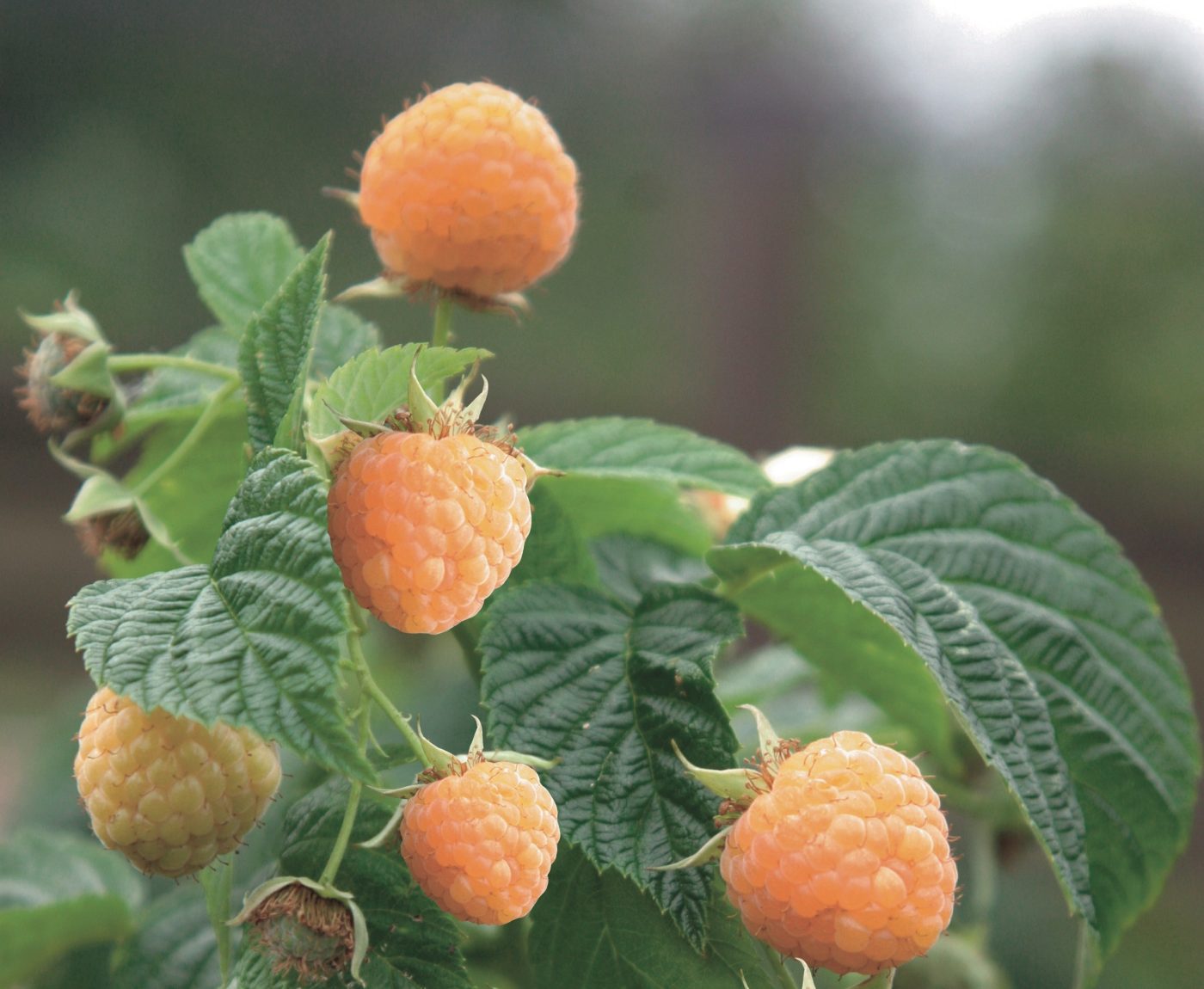
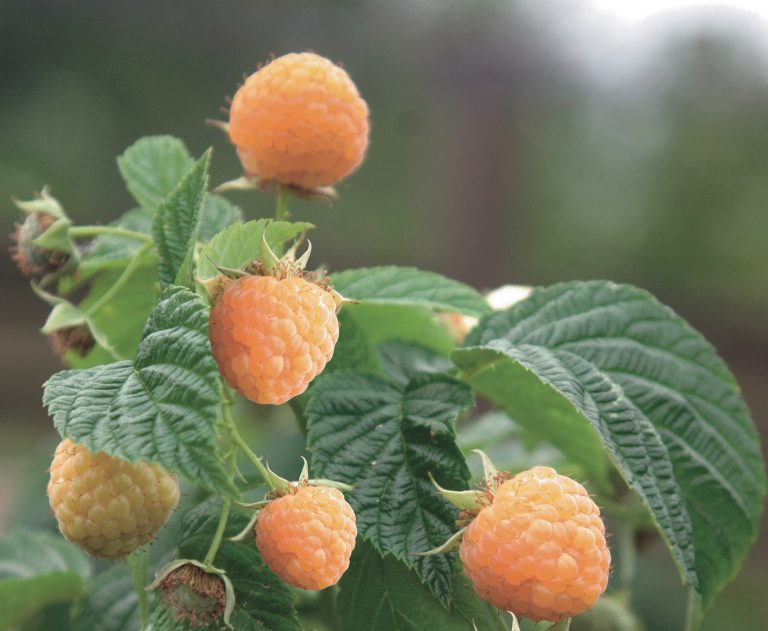
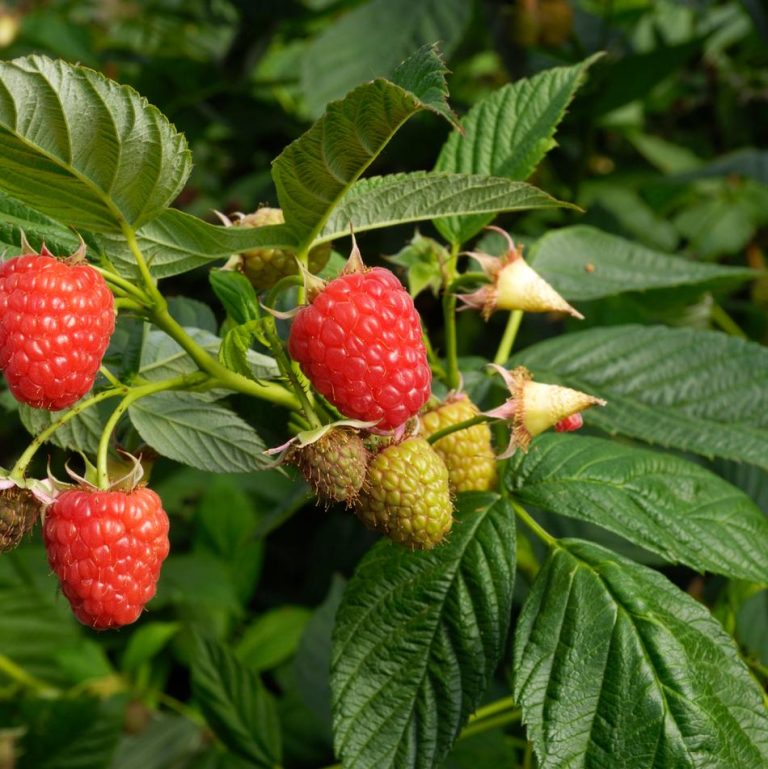
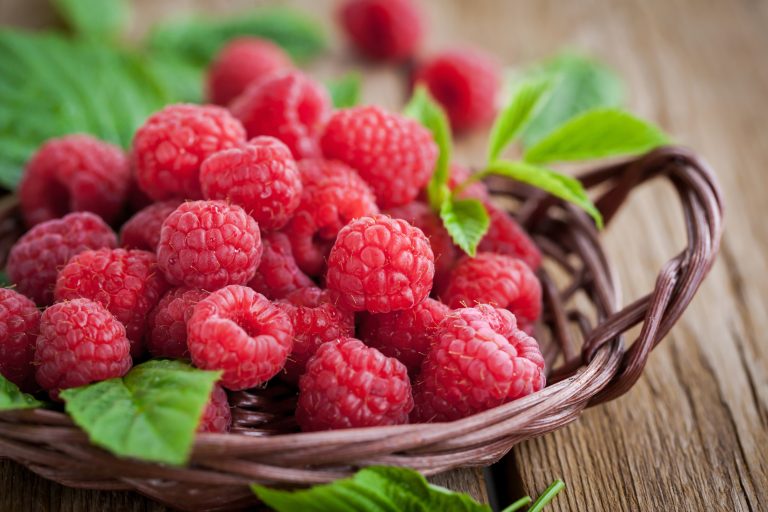
Raspberries bear fruit on canes that must be managed by fruiting type. Summer-bearing cultivars crop on second-year canes; primocane-fruiting cultivars can crop on first-year cane tips and may also yield the following summer if retained. Keep rows open for picking and renewal growth.
CHARACTERISTICS & ATTRIBUTES
Growing Temperature: Seasonal cane growth after winter rest. Fruiting temperatures and schedules depend on cultivar and cane type.
Soil pH: Slightly acidic soil is preferred for raspberries. Use a fruit-crop soil test to guide amendments.
Pests and Diseases: Scout for cane borers, aphids, mites, Japanese beetles and spotted-wing drosophila; anthracnose, cane blight and Phytophthora root rot are common.
Potting and Timing: Use clean, correctly labeled canes or liners. Identify floricane- versus primocane-fruiting cultivars before planning fruiting or pruning.
Moisture: Irrigate thoroughly, then allow the surface to begin drying before watering again. Young canes should never be allowed to wilt severely.
Planting Level: Set the crown or root flare at the original media line; spread bare roots naturally rather than bending them upward.
PGRs/Pinching: Remove spent floricanes after harvest. For one fall crop, mow primocane-fruiting canes during dormancy; a two-crop system retains the unfruited lower cane.
Lighting: Full sun and good airflow through the row.