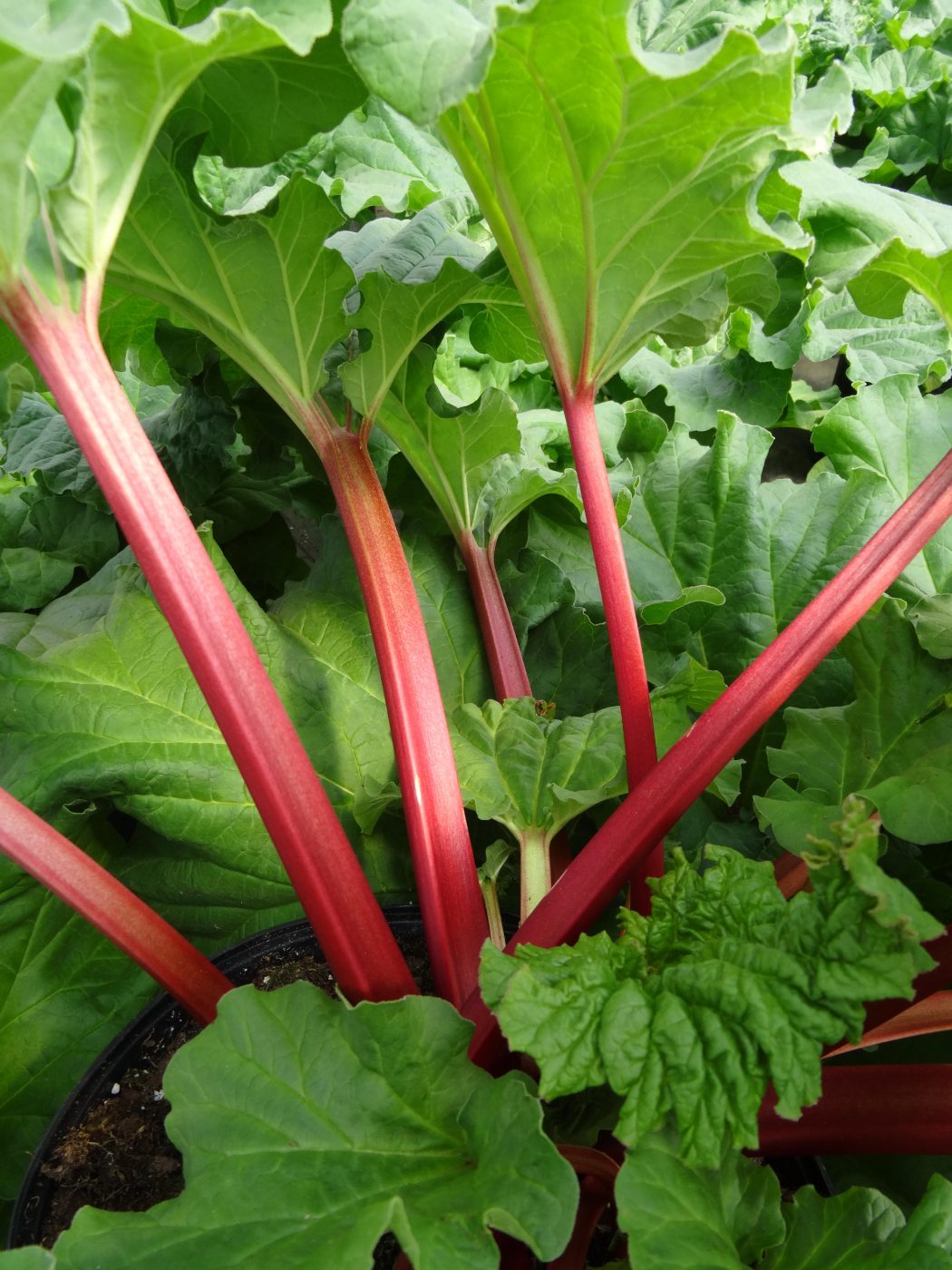
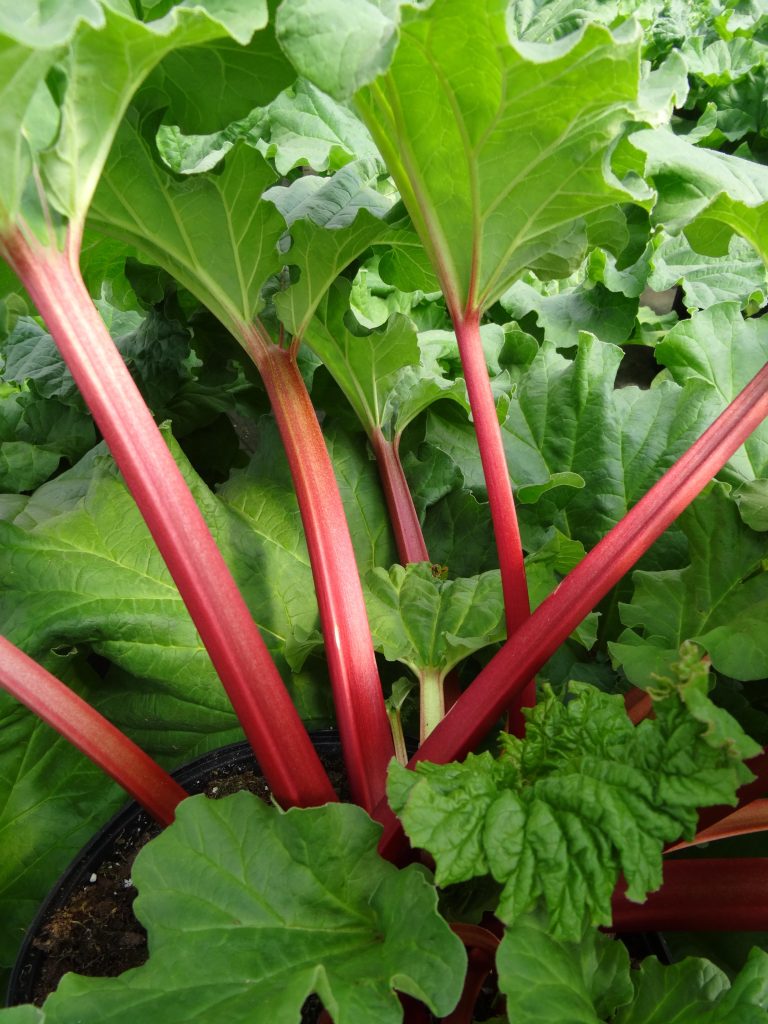
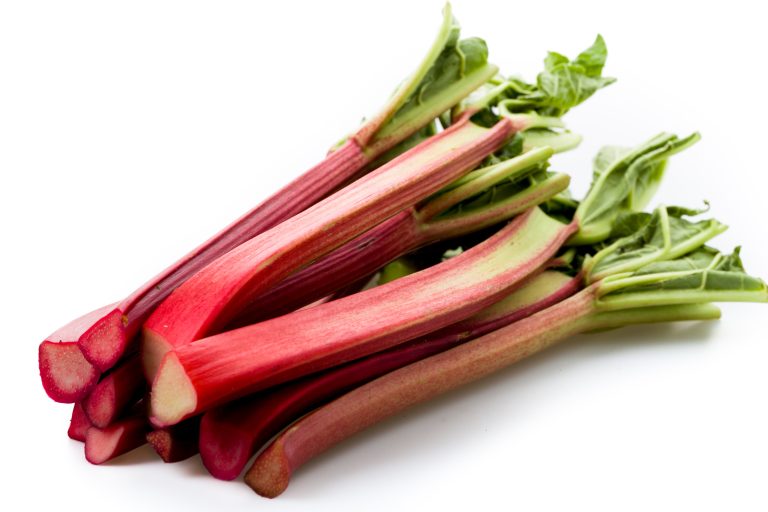
Rhubarb produces broad leaves on fleshy, tart stalks used in cooking. Let new crowns establish before harvesting heavily and leave enough foliage to rebuild reserves. Eat the stalks only; the leaves are toxic.
CHARACTERISTICS & ATTRIBUTES
Growing Temperature: Best stalk growth occurs in cool weather. Summer heat can suppress growth even when crowns remain alive.
Soil pH: No narrow pH requirement for garden rhubarb. Amend the bed from a soil test.
Pests and Diseases: Inspect crowns for rot and leaves for spotting or slug injury. Remove declining plants for diagnosis; do not divide diseased crowns into new stock.
Potting and Timing: Set dormant crowns with buds just below the surface in a large, freely drained pot. Allow establishment before substantial stalk harvest.
Moisture: Keep the root zone evenly moist during leaf and stalk development, with drainage between irrigations. Reduce water when crowns are dormant.
Planting Level: Set dormant crown buds about 1–2 in below the soil surface; keep actively growing liners at their established depth. Avoid a hollow that holds water over the crown.
PGRs/Pinching: No pinching. Remove flower stalks and leave enough leaves to maintain crown reserves.
Lighting: Full sun; protect from extreme summer heat.