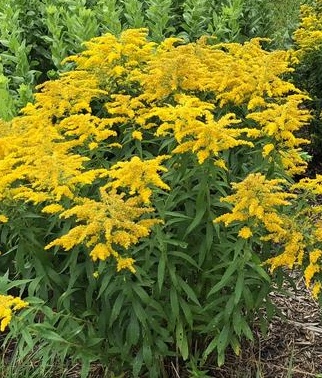
Goldenrods carry sprays or clusters of yellow flowers late in the growing season. They supply nectar and pollen to insects and combine well with grasses. Choose compact or clump-forming cultivars where a spreading species would outgrow the border.
CHARACTERISTICS & ATTRIBUTES
Growing Temperature: Seasonal spring and summer growth for late flowers. Cold and daylength response depend on the cultivar.
Soil pH: Tolerates several soil reactions. Species and soil moisture should guide the planting choice.
Pests and Diseases: Goldenrods may have rust, mildew or leaf spots. Check aphids and other feeding damage without treating every insect on a pollinator plant as disease.
Potting and Timing: Use clumping selections where container control matters. Give rhizomatous types enough room and plan for late-season bloom.
Moisture: Water young goldenrods regularly until established. S. rugosa favors more moisture than some dry-site species; do not use one dry irrigation cycle for all selections.
Planting Level: Set the crown at grade and keep basal foliage clear of wet media.
PGRs/Pinching: An early cutback can shorten tall stems and delay flowers. Avoid trimming immediately before the autumn display.
Lighting: Full sun; a few woodland species tolerate more shade.